Showing posts with label Chicago Radio Spotlight. Show all posts

Monday, June 13, 2022

Media Interviews from the archives


 One of my regular jobs is writing about the media. I've been doing that now for over 30 years. Every now and I then I like to dip into the archives and feature a few of them.


*Today is Bill Turck's birthday. Bill is the current host of Chicago Writes: A Podcast by the Chicago Writer's Association. A few years ago I got a chance to interview Bill for Illinois Entertainer about his radio show and his very unique and interesting past. You can read that here.  Bill recently suffered a stroke and is going through a difficult period of rehab, so we send out our birthday and get well wishes to him.


*Former WGN agricultural reporter Max Armstrong is also celebrating a birthday today. I got a chance to interview Max in 2010 for Chicago Radio Spotlight. He has some great stories, which you can read here.

Friday, March 11, 2022

Les Grobstein


Today would have been legendary Chicago sportscaster Les Grobstein's birthday. Unfortunately, Les passed away very unexpectedly earlier this year. In honor of Les, I've decided to re-post a portion of the interview I did with him in 2009. The entire interview is here at Chicago Radio Spotlight.


Rick: I almost don't know where to start with you because you've done so much and been involved in so many interesting radio moments. But there is one thing I don't think I've ever heard you speak about: your first job in the business, with Sports Phone. That wasn't technically radio, it was a phone recording, but it was done as if it was a radio broadcast. For people that are too young to remember that, would you mind talking about what that was, and give us a few of the names of people that worked there?

Les: Dick Gonski, the former Bulls color commentator, was our GM. I had the daytime shift. Ron Gleason was the nighttime guy. Tom Greene, who later did sports huddle on WMAQ, was also there. Pat Benkowski was there. Ted Robinson, who went on to be a big time play by play guy, was there. We also had George Ofman, David Schuster, Fred Huebner, geez, I know I'm leaving some people out, but the list goes on and on.

I was on the daytime shift by myself and didn’t have to alternate like some of the other guys. I got to do quickie quizzes every day, which I’ve always been good at it. We even had a quickie quiz hall of fame. The others at nights and weekends were basically a scoreboard. During the daytime there wasn't as much going on, the Cubs were the only ones playing day games, everyone else played at night, so I was given much more leeway.

Some days I would go to the game and do the updates from the game, but what really helped me was I was allowed to do creative stuff. It really was more like a show. When Rick Talley left for the LA Times, they went looking for someone to replace him at WLS, and Bud Miller said that hearing what I was doing on Sportsphone helped me. I also knew two people at WLS--Bob Sirott and Tommy Edwards, who was already doing the Bulls public address. So, they asked me to come into the station. I met everyone else there, including the program director John Gehron, and they all liked what they heard, but Bud told me, yeah, we’ll get back to you. We’re looking at 50 other people.

I didn’t think I had a chance. In the interim, I was called in by Reed Pence at the Loop and a couple of other people over there, and they were interested in having a sportscaster too...and we were in the same building as they were (the Hancock)...so that seemed like it could really happen. That chance died when they put together their deal for Disco Demolition. Part of the deal was Mike Veeck would come in and do what was basically nothing more than a promotional announcement for the White Sox. He did that for about a week and a half before the actual event. Obviously after it blew up in their faces, they dumped the idea. Mike Veeck was out.

Now we're in early fall, and I'm traveling to cover the 1979 World Series; the Baltimore Orioles against the "We are Family" Pittsburgh Pirates. I got a call from Bud Miller saying "we want to put you on the air tomorrow with Lujack and Sirott, and we’ll see how it goes for a few weeks." I did those first few reports from the World Series. When I got back from the World Series, the very next morning my son was born. At his wedding a few years ago they played “We are Family," as a sort of remembrance of what was happening when he was born.


As for WLS, I did my first in-studio thing with Bob Sirott (photo), and they called me into a meeting right after that, and offered me a 5-year-contract. I stayed there for the next ten years.


Today, by the way is officially Les Grobstein Day in Chicago, in case you missed this item in yesterday's Robert Feder column...

Les Grobstein would have celebrated his 70th birthday this Friday. To honor the incomparable Chicago radio sportscaster who died in January, Mayor Lori Lightfoot this week officially proclaimed March 11 “Les Grobstein Day in Chicago.” (Here is the link.) The tribute recalls that Grobstein “was known as a walking sports encyclopedia who had an ironclad memory of even the smallest details and who equally loved all Chicago sports from high school, college, professional and everything in between.” It even mentions Grobstein’s historic role in recording Lee Elia’s infamous eruption at Wrigley Field in 1983. Capping a legendary 50-year career in his hometown, “The Grobber” hosted overnights on Audacy sports/talk WSCR 670-AM.

Monday, September 08, 2014

Tommy Edwards

Tommy Edwards announced that he's retiring from the radio. Robert Feder had all the details over the weekend. I went back into my archives for my Tommy Edwards interview. This is from 2011, but it hits all the career highlights, including his legendary run at WLS-AM.

You can read it here.

Friday, September 05, 2014

RIP Roy Leonard

So sorry to hear about the passing of Roy Leonard. He was a Chicago institution, and will be missed. Over the years I've interviewed hundreds of radio guys, and he was one of my all-time favorite interviews. I could have talked to him all day.

After I finished transcribing the interview, I liked it so much I decided to use all of it. That's the only time I've ever done that in all the interviews I've done. When Roy read it, his response was: "You used the WHOLE thing?"

Yes I did. And in honor of his passing, I'm reprinting the WHOLE thing. This appeared in Chicago Radio Spotlight in 2010.


Rick: I was surprised to see that it’s already been almost twelve years since you signed off as a full-time host at WGN. Do you miss it?

Roy: In all honesty, no. I had a wonderful time doing it, but in the late 90s I wasn’t really pleased with the way radio was going. I was never controversial, and didn’t enjoy controversy. There were a few times I canceled interviews with authors, because I read the book and thought, oh no, I don’t want to talk about that. I thought the book was terrible.

The business of radio had also changed and was moving in a new direction. I joined AFTRA in 1954, so I called AFTRA headquarters in NY and asked what the pension was, and they told me, and I said to my wife, why am I working? It’s a generous pension. I could actually afford to retire. I didn’t have to do stuff I didn’t want to do anymore. I still fill in occasionally. And still do commercial work. But I don’t miss the drudgery of doing it every day. I like being my own boss.

Rick: I’ll confess that I was a long-time listener of your show, from a very early age. The radio was always on in my house, and it was always tuned to WGN. Of all those classic WGN hosts, I think you managed to change with the times most successfully. You were always tuned in to what was happening, in Chicago, in pop culture, in politics, through the 60s, 70s, 80s and 90s. How did you do it?

Roy: Two things. First of all, my children. I have six sons. There were at least 4 different radios on in our house, listening to all sorts of different stations. One loved WXRT. Another one was a big Dahl & Meier fan. I heard my kid’s music, and I heard what they were talking about. Although, as an aside, they wanted to hear what I was into too—my music. My youngest son was a Dead fan and enjoyed Steve and Garry, and one day he came up to me and asked if he could listen to my old records—and I said sure. I still remember how excited he was when he discovered Billy Holiday. I guess my house was always liberal in that sense. My kids could listen to or read anything they wanted.

The other thing that kept me current was when I got my first radio producer, Peter Marino. There’s a story at Royleonard.com about him. He was much younger than me, young enough to be my son. And one day he came up to me and said it was time to get rid of the Ray Conniff records. He was the one that turned me on to a lot of things I might have otherwise missed. To tell you the truth, I’m not a nostalgia buff. I’d rather enjoy what is going on now than listen to those old boring Andrew Sisters records. I’ll be 80 at my next birthday, but I don’t like to bring that up, because most of my 80-year-old friends are boring as heck. (laughs)

Rick: You also weren’t afraid to talk about your family life on the radio, which made you a three dimensional figure to your listeners. When I mentioned to my mom that I was interviewing you this week, she immediately ticked off the number of children you had, that all of their names started with the same letter, your wife’s name, and that you supported soccer (which was important to her). To her, you were a part of the family. Did that sort of attention ever cause any problems with your actual family?

Roy: Before I came to Chicago I used to have the family on with me at my radio station in Boston around Christmas time. They would come into the studio, and they got a big kick out it. We did the same thing in Chicago after I started at WGN. (Photo: Roy and the family, Christmas 1973) Then one day one of the boys, who was in New Trier at the time, said ‘Do you mind if we don’t do this anymore?’ He was getting kidded about it at school—so we stopped. But every time I talked about them, you’re right, the listeners really liked that I would share my family stories. I was proud of them. Sheila didn’t mind. So we fell into a routine.

Rick: I think the best way to describe your style on the air is “friendly.” For some reason, that’s a rare commodity on the radio these days. Confrontation and controversy have become the norm. Why do you think that is, and are there any shows out there now in your opinion, that carry on in that Roy Leonard tradition?

Roy: I happen to like the new WGN morning guy Greg Jarrett. I get mail from people that don’t like him, but I really do. I think he is an intelligent guy, has a wealth of experience, and I like that he shares some of those stories. Some people think he’s talking about himself too much—I disagree. I also like that he doesn’t always try to be funny. Steve Cochran is very bright and is a really talented host, but sometimes I really think he tries too hard to be funny.

As for the controversy and confrontation, the world of the computer has changed things immensely. Everyone has an outlet, a way of venting their frustrations. I was listening to Dave Kaplan the other night. He was on after the ballgame and the Cub fans were ranting and raving about the team. They just wanted to let off steam. That sort of thing has spread. I don’t know why. It just has. Why did rock and roll radio take over in the 60s? People were looking for change.

In 1967 my station in Boston went rock and roll. They were a WGN-type station before that, #3 in the market, but they wanted to be #1. And that’s what they became. They were #1 in seven months. They asked me to stay on, but I didn’t want to be a rock and roll disc jockey. I liked the music, but I didn’t want to play it on the radio. One of my best friends was Curt Gowdy, he was a neighbor, and I asked him if he knew anyone that would hire me. He called his buddy in New York, and it turned out that he repped WGN.

At the time, WGN had marvelous ratings in the afternoon because of Cubs baseball, but after the season ended, they got no numbers. So, I bought three Chicago newspapers, The Trib, Sun-Times, and The American, went through them, and made a tape of what I thought my show would sound like in Chicago. They liked the tape, and Wally was taking some time off, so they paid me to fill in for him, and that Friday after filling in for a week, they asked me to work for them in the afternoon slot, 1 to 4 PM. I had been getting up at 3 in the morning, so I said, that’s great! But, my family was in Boston, and I have six kids, and I couldn’t just pack up and leave. So they agreed to fly me home to Boston when the Cubs were in town that summer of 1967. That made the move a little easier. We were able to sell our house and move out here before school in the fall.

As for my style of radio, you’re right, nobody is really doing that kind of show right now, but then again they weren’t doing it before I got here either. I listened to Chicago radio as much as I could (Howard Miller, etc.) when I first came to town. I tried to find what nobody was doing, and make that my own. Nobody was talking about theatre or film at the time, and I enjoyed both immensely, so when I first started, that’s what I talked about.

I remember Aaron Gold was representing the Ivanhoe, and he heard me talking about theater, so he asked me to come out and see their latest show. And that’s when I started getting these great guests.

Marcel Marceau (photo) was one of my first guests—and we really hit it off. Ironically, he wouldn’t shut up (laughs). We even had him out to the house. That’s one thing I never really talked about on the air—that I spent a lot of time with some of these people off the air—many of them came out to the house. I remember another time we had Peter Noone of Herman’s Hermits over. He ended up in the bedroom upstairs playing guitar with my boys.

Rick: I’ve interviewed quite a few of your former colleagues and many of them mentioned you as a sort of mentor. Max Armstrong called you “a class act.” Spike O’Dell said you were a “consummate pro”. Dean Richards said he developed his sense of broadcast responsibility from you and your contemporaries. All of them modeled themselves after you in a way. Who served that mentor role for you? Who did you pattern yourself after?

Roy: The only one that immediately comes to mind is Arthur Godfrey (photo). I remember listening to his radio show out of Washington, and I thought this man does a commercial that doesn’t sound like a commercial. I emulated that from Godfrey. Edward R. Murrow. He was so classy, so professional, in the way he reported the news. There was one personality in Boston, his name wouldn’t mean anything here, but he had an evening music show—and he would time out the lip of every bit of music he played. I thought that was great. I stole that—tried to do that. But those are only ones that really come to mind. Nobody has ever asked me that before.

Rick: Here’s another one I’m guessing no-one has asked. I see that you were stationed in Nome Alaska in the Air Force, and worked at the radio station up there.

Roy: That’s true. Here’s a story I don’t think I’ve ever told publicly. I never met my father until I was in the service. He deserted our family when I was 2, and to be honest, I was pretty pissed at him. He had written a few times and he was a Marine and ran a construction business. I knew of him and knew what he was, but that’s about it.

I was stationed at Sampson Air Force base in New York, and I heard that they were looking for guys to go to Alaska, because the natives, the Eskimos, were all listening to Radio Moscow—and everyone was afraid they would be too influenced by that. They sent an Army building crew up there to build a radio station—and the Air Force staffed it. I was one of the staffers. I did the all-night show. And I really enjoyed it.

And that’s where I met my father...in Alaska. We got along, but I think he was trying to make up for lost time, and it didn’t really work. We went out to dinner a few times. He was a hunter, and we went moose and bear hunting. I’m glad we didn’t actually find any. I must admit, I was not the greatest GI in the world. I paid this kid to clean my rifle. I couldn’t stand it. We really almost lived the civilian life up there because it was so remote. I don’t think I put a uniform on more than once or twice. I probably shouldn’t admit that—but oh well—I guess the statute of limitations has expired by now.

Rick: I think what you are remembered for the most are your interviews. The Roy Leonard interview is still the gold standard of radio interviews. You did hundreds of them over the years. I found references to a few of them that I’d love to hear more about. Did you really interview John F. Kennedy?

Roy: Yes. Back in Boston, I had a Sunday afternoon television show called The Yankee Camera. We carried the NY Giants football games, so we never knew how long the show was going to be, because it followed the game. There were times it was just a few minutes, and then there were times when we knew we had at least a half hour. Just before the New Hampshire primaries, Kennedy was running for president, and he came on the show. By the way, I don’t have a video or audio of that, we didn’t keep video records in those days. It’s a shame. It was a great interview—he was very warm, very friendly.

To show you how politically savvy that family was, Kennedy shook the hands of everyone there—everyone in the booth, everyone at the station. Then, when I got back to my office, the phone rang. I was told there was a call from Ambassador Joe Kennedy. He said “Roy, I just want to thank you for being so nice to my son.” I met him a year or two later and he remembered me.

Rick: I’m just going to mention a few more names of people you interviewed, and if you don’t mind, please tell me your memories and impressions of them too.

Roy: Sure.

Rick: Ronald Reagan

Roy: He was President of Screen Actors Guild at the time—somewhere in the early to mid-50s. I can’t remember what the interview was about to be totally honest with you. All I remember is that I found him politically savvy. His fellow actors were a little worried at the time, wondering if he was the right man for the job—he wasn’t totally accepted by the other Guild members yet. But he was successful at persuading them—and I do remember that we got into a discussion of politics and I was very impressed with him—I was surprised he was as knowledgeable as he was. I liked him very much. I never voted for him (laughs), but I was impressed by him.

Rick: George Harrison

Roy: He came to Chicago on a tour in the mid-70s and he was just in to plug the new album. I found him to be very warm, friendly, smart, bright, and fun.

Rick: John Belushi

Roy: I was on one of those junkets, I think that Belushi and Ackroyd had just done “Neighbors,” and so I was interviewing both of them. It’s really not that difficult to make a personal connection with someone, if you share an interest, and with John all I had to do was mention I was from Chicago—and he opened right up. And then when I mentioned Second City—and my love for it—that was all he needed to hear. My son, by the way, is now the VP at Second City.

Rick: Jimmy Stewart

Roy: He came in to promote his book of poetry. I have a tape of that somewhere. We’re eventually going to be putting up some of these interviews at my website (RoyLeonard.com)—so thanks for bringing that one up. I have to go look for it. I found him to be exactly like I expected him to be. Down to Earth—not overawed by the adulation—nice guy. Genuine guy. Just as you would imagine him. I liked his poetry very much too.

Rick: Mel Brooks

Roy: I can’t remember why he was in town, but he agreed to do two full hours with me. A lot of his stuff was on record at the time, and we did a lot of prep—my producer and I, we had bits from his movies, music from the soundtracks, you name it. Mel was impressed that it was something more than just a conversation. He was also absolutely hilarious. I’ll never forget his last line of the interview. He said: “Roy, do you always do your show in your underwear?”

I got to know him a little bit over the years, spent some time with him, went to his office in Hollywood—kibitzed with him. When The Producers came to Chicago, I ran into him on opening night, and he remembered me, and we spent some time with him.

I don’t know if you remember, but we used to take tours of listeners around the world to various different places, and one time we took a group to Italy. We were in a village in Northern Italy, and we pulled up to the hotel with our coach, and I went to the front door, and Mel was there. He said “ROY!” I said “MEL!” He was just hanging out at the hotel while his wife (Anne Bancroft) was filming a movie. Mel came on the bus and entertained us all.

Rick: That’s incredible.

Roy: If you make personal contact, people remember you. Burt Reynolds was one of those guys too. I met him, and we hit it off, but he had never come to Chicago. Well, one time he finally did come to town, but I was out of town. My producer called me in St. Louis, and said ‘Burt really wants to be on the show. He said he’ll stay over until you come back.’ And he did. These are some of the wonderful friends that you can make if you’re friendly, but don’t get overawed by them.

Rick: Thanks for spending some time with me. I could have asked you a million more questions, but it’s impossible to encapsulate thirty plus years in an interview like this. But while I have you, I did want to ask you one more thing. I read your blog post about the current WGN staff. You were pretty honest in your assessments, and some of those assessments were publicized by Robert Feder in his Vocalo blog. Did you get any heat for that?

Roy: My wife is a little angry at me because she thinks I’m becoming a curmudgeon in my old age—telling people what I really think, and I didn’t always do that—let’s face it. But I’m free to say what I want now, so I do. To tell you the truth, I’ve gotten nothing but positive comments about that, even from WGN people. I sat with the GM Tom Langmyer on the night they honored Wally, and he was very friendly, although we didn’t really discuss the current lineup that night.

But you know, there is some good stuff on WGN now. I think John Williams has really developed—he has become more opinionated—and is doing the kind of show they wanted me to do, I think. You know, express a personal opinion, and then let the listeners either agree or disagree, without yelling at each other. He’s very good at that.

I think Garry Meier has really improved too—he has found a groove. I’ve been listening to him more and more, and enjoying the show. He’s getting better and better.

Rick: Thanks Roy.

Roy: Enjoyed it, man. Tell everyone to go visit Royleonard.com.

Monday, February 03, 2014

The Day the Music Died

On this day in 1959, Buddy Holly, Richie Valens, and the Big Bopper died in a plane crash in Iowa.

It was four years before I was born, but I have since met many of the people affected by this important day in history. Bobby Vee filled in for Buddy Holly at the gig he was flying to--and became a star. We had him him on Landecker's show and he told the story. We also had Nicki Sullivan, one of the original Crickets, on the show.

Bob Hale was the MC of that last Buddy Holly gig, and I interviewed him a few years ago for Chicago Radio Spotlight. Here's the crucial part about the day the music died...

Rick: I know you've had to answer this question a million times, but please indulge us by answering it one more time. You were the Master of Ceremonies on February 2, 1959 in Clear Lake, Iowa--the last concert by Buddy Holly, Ritchie Valens, and the Big Bopper. Describe the scene backstage for us, and explain your part in that ill-fated coin-flip.

Bob: The bus with Valens, Holly, Richardson, Dion, and Frankie Sardo arrived in the late afternoon…actually around 6PM . We hurriedly got them something to eat, and then all pitched in to set up for the performance. Those days were pre-high-fi days, so we had to deal with only one microphone. The tour manager was Sam Geller of the GAC Corporation (which would go on to purchase Ringling Brothers, Barnum and Bailey Circus). As the set-up was taking place, Buddy was playing the piano. Sam and I were listening and he said to me, “This guy is going to be one of the greatest popular music composers of our time. He’s so talented – he can play so many instruments, and he creates such interesting music.”

Buddy’s talents were put to use during the concert as he played the drums during the Dion set. The regular drummer, Charlie Bunch was in the hosp[ital in Green Bay , Wisconsin , having suffered frostbite on the broken down bus! Buddy would play the drums for Dion’s set, which began the second half of the show. The first half was Frankie Sardo, and Big Bopper.

The second half, Dion and the Belmonts, followed by Buddy.

When Dion’s set was over, I sat down with him on the riser in front of the drum set and asked him to introduce his musicians. When it came time for the drummer Dion said something like: “This fellow is taking the place of Charlie Bunch, our regular drummer who is in the hospital in Green Bay suffering from frost bite. Um...let’s see…the drummer’s name…is…ah, oh yeah! BUDDY HOLLY!”

Buddy jumped up, grabbed his guitar and began singing “Gotta Travel On.” The backup men quickly changed places and joined Buddy before he was half way through the first stanza.

There was some drama taking place off-stage, even before we got started, actually. At one point Bopper was sitting with my wife, Kathy, and me in a booth. Kathy was expecting our first child, and Bopper said something like, “That’s what I miss most…being around my wife when the baby moves. Kathy, may I feel your baby moving?” Kathy took Bopper’s hand and placed it on her stomach as the baby moved. Bopper smiled: “I can’t wait to get home to do that.”

Interestingly, no such conversation took place involving Buddy. We didn’t even know at that point that Maria was expecting.

During intermission the back-and-forth conversation between Bopper and Waylon Jennings took place, resulting in Waylon giving up his seat to Bopper. At that point Waylon uttered a phrase that would haunt him all his life – “Well, OKAY, but I hope your plane crashes!”

Years later, at a social gathering in Kentucky, Waylon and I recalled that night. He said: “Man, there isn’t a day goes by that I don’t wish I could take back that comment. The next day when I got the news in Fargo, I went nuts. I cried, I yelled. And I began to drink. Drugs helped along the way. Of course, I realized years down the road I was killing myself, so I quit. I don’t know, maybe deep inside I was so damned guilty, I was trying to kill myself!” He admitted that no matter how long he'd live, he’d always be haunted by Feb 3rd 1959.

After the show was over that night, Tommy Allsup, pressured by Ritchie Valens, said, “Let’s flip a coin.” It’s at this point that two versions of the coin flip emerge. Tommy maintains he flipped the coin; I maintain that as soon as he suggested it, he reached into his pocket and realized he had no money – he was still in his stage clothes. He asked me if I had a coin. I took out a 50 cent piece, said to Ritchie, “OKAY, Ritchie, you want to go, you call it.”

“Heads!”

“Heads it is, Ritchie, you’re flying.”

Tommy said, “OKAY,” and went out to the car to retrieve his bags which he’d already put in Carroll Anderson’s car. Regardless which version of the coin toss you hear or accept neither Tommy nor I demand “ownership.” We’ve talked about this, and have no emotional investment in either version. What we agree on is that night was a tragedy and an extremely emotional one for us all.

Rick: What was that next day like?

Bob: February 3rd would be a painful day for family, friends, fellow-musicians, and for those who attended the Winter Dance Party. Within minutes of my announcing the plane crash – I was pulling the 9 to noon shift on the 3rd, teens began arriving at the station (KRIB) just to talk. It became a day-long wake, Pepsi and Coke distributors brought extra cases to our studios – we had so many people just “hanging around.” Parents came, too. Many had been at the Surf the night before. It was the custom of Carroll Anderson to invite parents to the weekly record hops free of charge. Many teens and parents were in tears.

Some students from Waldorf College had been at the Surf the night before. Some came to the studios. I interviewed college as well as high school students. What I didn’t know at the time was that Waldorf, a two-year Lutheran college, did not condone dancing! The school had a rigid Danish-Lutheran background which was extremely conservative in social activities – “Sad Danes,” they were called in Lutheran circles. When the school heard about the students who’d been to the Surf, they immediately suspended the dozen or so students for a couple of weeks. No comments on the deaths – just on “school policy.” Fortunately time has given Waldorf a more enlightened school administration, as well as transforming the college into a four-year, well respected liberal arts college.

On the way home in the afternoon, after conducting about two-dozen telephone interviews with radio stations across the country, I drove by the crash site. The bodies had still not been removed, as the ambulances were still in the corn field. I could not bring myself to walk the hundred yards to the site – and to this day, I’ve not been able to make that walk!
And Bob Dearborn became an expert on the song about that day ("American Pie") and became a nationwide sensation with his interpretation of the song. I worked with Bob at WJMK, and got to know him well enough to ask him to write a guest blog for me on the anniversary of Buddy's death. He was gracious enough to comply...


The Day the Music Died
By Bob Dearborn


Some dates – December 7, 1941; November 22, 1963; August 16, 1977; September 11, 2001 – remain as indelible in our minds as our memory of the shocking events that took place on those dates.

We have just marked the anniversary of another stunning tragedy, one not as big as those others but an important milestone for many people of my generation and, to be sure, for me personally: 55 years ago, three popular young music stars perished on what came to be called a dozen years later, “The Day The Music Died.”

In the very early hours of February 3, 1959, a small plane chartered after a concert in Clear Lake, Iowa, crashed shortly after takeoff leaving all four on board dead: the pilot, singer Ritchie Valens (‘La Bamba,’ ‘Donna’), J.P. Richardson who performed under the name, "The Big Bopper” (‘Chantilly Lace’), and Charles Hardin Holley, known by millions of his fans the world over as Buddy Holly.

I had seen death before, close up, although the earlier experience for me was more curious than catastrophic, more surreal than sad. Oh, I liked my grandparents, all right, but I was 10 and 11 years of age when they died and I hadn't developed enough yet intellectually or emotionally to really understand or feel an impact of their passing.

Of course, two years later, I was much more mature, and starting to realize all kinds of important things. What a revelation it was to discover that music could be about more than the beat, that movies and TV shows could be more than shoot ‘em ups and car chases, that the sudden loss and finality of death could be devastatingly sad.

The first time I was really moved by the passing of someone I cared about was when Buddy Holly died – somebody I “knew” only from his music, his hit records, his appearances on “The Ed Sullivan Show.”

I couldn't have guessed it at the time that his music would have a great influence on future generations of musicians and songwriters, including the young, not-yet-famous Beatles and Rolling Stones. I just knew I liked it. From “Peggy Sue” and “That'll Be The Day” through everything that followed, I was first a fan of his music.

He changed the style of rock ‘n’ roll music by altering the chorus and verse pattern of contemporary song composition. He popularized the four-man group configuration. Buddy was the one who advised Elvis to get a drummer (to join Scotty and Bill in Elvis’ backup band). He was the first rock ‘n’ roll singer to use violins, a whole string section, on his records (‘It Doesn't Matter Anymore’). For a man who enjoyed fame for only the last year and a half of his young life, he made the most of it. Leaving his fingerprints all over contemporary music, his influence has been felt and his popularity has sustained for almost 50 years.

It was more than the music for me, however. In an era of pretty-boy teenage idols ruling the music charts, here was this young Texan who was kinda … geeky. He wore horn-rimmed glasses on his face and his emotions on his sleeve for all to see and hear – from the youthful pedal-to-the-metal exuberance of songs like “Rave On” and “Oh, Boy!” to the playful intimacy of a song like “Heartbeat.”

This guy was not only different and good, he was the first rock ‘n’ roll star that I could relate to, since I was a gawky, sensitive, geeky kid with black, horn-rimmed glasses, too! Buddy Holly’s acclaim and success confirmed that it was okay to be and look that way, that I was okay. He was MY hero. And his death was a crushing blow.

Ritchie, the Bopper and Buddy were the first popular music/rock ‘n’ roll heroes to die suddenly, shockingly at a young age. Theirs are the first names on a list that we review with heartache for its scope and length: Eddie, Johnny and Jesse … Patsy, Gentleman Jim … Sam, Otis and Frankie … Janis, Jim, Jimi, Ronnie and Duane … Jim, Rick, Karen, John, Harry … Marvin and Stevie Ray. Elvis. John.

Each time the bell has tolled, we've been stunned to learn of the loss of another hero, another artist who touched us with their music, a person we never met but who was so much a part of our lives that we viewed them as friends. And, too, with each passage, we've felt the loss of yet another important touchstone of our youth.

For me that all started with Buddy Holly. I was changed by his presence while he was alive, profoundly moved by his untimely death, always transformed by his music. And touched yet again by all of that in late 1971 when I first heard Don McLean’s brilliant composition, “American Pie.” Masterpiece is not a big enough word to describe that recording.

The song’s story begins with Buddy Holly’s death … as felt and told by one of his great fans, Don McLean. The clever metaphors of American Pie’s lyrics, then as now, leave many people confused, unable to understand what the song is about. Don and I are the same age, we lived through the same music era with similar reactions to all the changes that occurred, and we were, first and foremost, big Buddy Holly fans. I knew immediately what Don was saying in that song.

Where did all this lead? I invite you to click on the link below that'll take you to a Web site that Jeff Roteman created in tribute to my analysis of American Pie. I hope you enjoy “the rest of the story” at this site, that it helps you appreciate what a wonderful piece of work American Pie is, that it makes you want to know more about Buddy Holly and his music, and that you find the experience a fitting observation for the anniversary of “The Day The Music Died.”

Bob's Full "American Pie" analysis can be found right here.

Bob's excellent The Olde Disc Jockey's Almanac can be found here.

Thursday, January 23, 2014

Chicago Radio & The Beatles

The 50th anniversary of the Beatles coming to America will be celebrated everywhere over the next few weeks (as it should be), and in his column today, Robert Feder has dipped into his archives to feature his great article that celebrated the 20th anniversary in 1984. You can read it here. Among the people he interviewed: former WLS radio personalities Ron Riley & Clark Weber.

I loved that piece. You know me, I can't get enough of this Beatles stuff.

It also made me realize that I have a few Beatles stories from those guys in my archives too. Here are few excerpts from the Chicago Radio Spotlight files...


First...Clark Weber...

Rick: I have to ask you this right out of the box because I love this story so much. Could you tell the story about the day you introduced the Beatles on stage at Comiskey Park?

Clark: Capitol Records threw a luncheon that afternoon for WLS and the Beatles at the Saddle & Cycle Club on Lake Shore Drive. A good friend of mine, Jim Feeley, was dating a model named Winkie, and I invited them to come along. Well, Winkie showed up in a two-piece tennis outfit, and she looked incredible. I sat her next to George Harrison and his eyes almost popped out of his head. She made nice with him for a little while and George really thought she was going to be staying with him all day. When Winkie got up to leave a few minutes later to go to a modeling audition, George was wounded. “You’re not going anywhere,” he said. Winkie replied: “Oh yeah? Well watch me.” Later that night Feeley called me and asked if she could come to the concert, and I said—‘You’re really pushing it’, but I did get her in. So, flash forward twenty years later. A photographer from the Sun-Times called me up to say he had a photograph he wanted me to see. It was the Beatles on stage at Comiskey Park. I’m standing to the side of the stage and so is Winkie, and George Harrison is on stage looking right at Winkie, giving her the dirtiest look imaginable. Winkie later married a pro football player, moved down to Texas and had five kids, but George never got near her.

Rick: What was it like on stage that night?

Clark: As soon as Bernie Allen and I walked onto the stage, the crowd went crazy because they knew what was coming. There were 38,000 screaming teenage girls and the sound was indescribable. I told Bernie to hold his hand out with his fingers spread. We could feel the vibrations in our fingers. I don’t think anyone in that ballpark heard a single second of the show. I was standing right next to the stage and I didn’t hear it.


Next...Ron Riley...

Rick: You were there for a pretty exciting time in music history; the dawning of the British Invasion. You even got the chance to interview the Beatles.

Ron: That’s true. Art Roberts and I were more tuned into the younger demos at night, and we climbed onto every bandwagon that came along. The people that ran the station had the insight to leave us alone and let us do what we thought was right. We developed our own character within the format, but we were pretty free. If we saw a trend, we could jump on it, and they would back us. The Beatles came on the scene, and the station got the record company to back us, and we got to be the station at their concert at Comiskey Park. They took a silver dollar survey and drew long hair on us, and I became “Ringo Ron.”

Rick: What were the Beatles like?

Ron: They were young kids, and they weren’t real sophisticated yet. They were way over the top. Everything was a big joke to them. They were very distracted. Art Roberts and I did a phone interview with them. They were on the set of A Hard Days Night at the time. They just passed the phone around to each other. “Would you like to speak to John?” Then Paul, etc. We recorded it in the afternoon, and played it back on our respective shows.


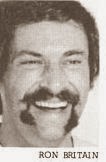
And finally, here's a bonus Beatles story, courtesy of former WCFL jock Ron Britain...

Ron: I did a few shows with the Beatles, and hung out with them a few times. I introduced them on stage. After the show, I was looking for something of theirs to sell—remember they were selling everything they touched in those days—even the sheets they slept on, so I went on stage and thanked the audience for coming out...and I saw that Ringo had left his drumsticks on the stage. I put them in my pocket and gave them away on the air the next night.

Another time I was with the Beatles at a press conference and they were getting all the same stupid questions, and I could tell they were completely bored, so I took out a sketch pad, and drew a picture for John. Somebody took a picture of us laughing...and then Paul took a look to see what John was laughing about, and someone snapped another picture. Then there was a picture with George, and then finally Ringo. That was the pecking order of those guys; John, Paul, George, and Ringo, and there were pictures of me with all four of them. I was happy about that because I was never the kind of guy who could ask for my picture to be taken with celebrities, because it just didn't feel right. So, I don't have pictures of myself with very many of these great rock stars, but I do have those pictures with the Beatles.

Hanging out with them was a strange experience. When you were with them, it was like being in prison. They had a whole floor in the hotel, and security was everywhere. One time I talked to Ringo for about three hours about pirate radio in England, which we both thought was very cool. I also told him that I called everybody "Tulu," and asked if he would say "Hi Tulu Baby" on tape for me. He wouldn't do it because he said it was "too commercial." So I asked John, and he said "Sure." Well after John agreed, they all did, and they went in their usual pecking order; John, Paul, George, and then Ringo agreed too.

Tuesday, November 05, 2013

Disc Jewkeys?

Robert Feder highlighted this awful headline, but interesting Chicago Jewish News article about four nice Jewish boys doing sports talk in Chicago.

I know three of the four (never met Bernfield), and they all have something in common in addition to being sportscasters and Jewish.

Silverman, Kaplan, and Grobstein have all been interviewed for Chicago Radio Spotlight.

Monday, November 04, 2013

Murphy is Back

Robert Murphy, known to millions of Chicago listeners as Murphy in the Morning for the last thirty-plus years, is coming back to the Chicago airwaves. But for the first time ever, it's not to do a morning show. He's going to do afternoons at WLS-FM. (Robert Feder has the details.)

His shift is 4-8pm.

Nobody is being fired, the hours are just being revised slightly. Greg Brown is moving to 9am to 1pm, Danny Lake is moving to 1-4pm, Landecker is now doing 8-11pm, and Dick Biondi is doing 11-2am.

(Of course, I interviewed Murph for Chicago Radio Spotlight a few years ago. You can read that here.)

Tuesday, September 17, 2013

RIP Jerry G. Bishop


I always had him on my interview wish list, but never got around to interviewing him. The great former WCFL jock (and the original Svengoolie) Jerry G. Bishop has passed away at the age of 77. Robert Feder has all the details.

I once interviewed his Svengoolie successor, Rich Koz, and this is what he said about Bishop, the man who gave him his big break:

The job with Jerry actually came about when he was leaving WFLD after they cancelled his Svengoolie show - he was in talks with NBC for both radio and TV, and he thought enough of me to try and get me involved as part of his team for the radio side. He did some fill in at WMAQ, with me filling the afore-mentioned sidekick/producer/goofball role- and, when they brought him in full time- first, in afternoon drive, then in morning drive- I went along for the ride.

It was a great gig, other than having to get up so early for the morning show- we’d ride in, going over the papers, and he’d read something about Dean Martin, and say-“let’s do a bit on this- you be Dean!” I’d write stuff and be about 85% of the characters and “celebrities” that called in- I’d write song parodies for him, invent new bits, and we’d do sponsored commercials as bits- for example, I played the president of a lumber/home improvement chain, playing him as a sort of dopey guy, in a running series of live read commercials, and they went over really well.

Plus, on Monday mornings, when the show started an hour earlier than usual, for a while, Jerry had me do that first hour by myself! Jerry was the best--very generous, and, as I’ve always said, the guy who’s responsible for me getting into the broadcasting business…so blame him!

In the mid seventies, someone at a local TV station had approached Jerry G. about maybe doing a summer gig reviving his Svengoolie character. At that time, Jerry felt he didn’t really want to do so, part of the reason being that he was thinking that- someday- he might actually want to run for a political office- and didn’t want his opponent holding up pictures of him as Sven saying “THIS is my worthy opponent?!” But- he already felt confident enough in me that he suggested that I could be the Sven character- as “Son of Svengoolie”- and he would produce and write it with me.

We had some false starts on it, and it didn’t really go anywhere- until Jerry was about to leave for the west coast, and asked what I planned on doing. I said I might try to pitch a TV show to local stations- and he said that, if I wanted to try and do the Son of Sven bit, he’d give me permission. It’s a long story, but, it finally ended up at WFLD- with me doing the Son of Svengoolie- in my original audition, I looked exactly like Jerry’s character, but, since they felt that looked too dated, I devised the look that finally premiered.

My character was pretty much based on how Jerry played the character, layered on my own personality, with the accent being, as Jerry puts it “Bela Lugosi crossed with Lawrence Welk!” I did the character there for 6 and a half years- and, even after that, was requested to do the character for appearances, radio and TV guest gigs- right up until I came to WCIU.

When I was taking the job here, Jerry was in town, and we talked about it- I mentioned that, even by the end of my WFLD run, there were people who said “SON OF Svengoolie? Who’s Svengoolie?”-and that I thought I might shorten the name or something. Jerry said –“I tell you what- you’re all grown up now- just be Svengoolie!” It was nice of him to hand over usage of the name to me.

Tuesday, June 04, 2013

Bill White is Out at WGN

This is not a surprise. From Radio Insight...

On Jimmy de Castro’s first day as President/GM of News/Talk 720 WGN Chicago, the station continues its shake-up with the dismissal of Program Director Bill White. Robert Feder reports that the leading candidate to replace White is Mitch Rosen, the PD of CBS’ Sports “670 The Score” WSCR since 2005. Rosen previously worked for de Castro from 1992 to 1995 as a producer at 97.9 WLUP. He has also programmed Sports “ESPN 1000” WMVP Chicago.

WGN has a mix of the two things Rosen has worked with the most at his stations; managing strong personalities and maintaining relationships with the teams the station covers as WGN is flagship of Chicago Cubs baseball, Chicago Blackhawks hockey, and Northwestern University football and basketball.

You know, it's funny. I just saw Mitch Rosen the other day when I was working on my next Illinois Entertainer column (an interview with Dan McNeil), and I jokingly said to him: "So Mitch, when do you start at WGN? Have you talked to Jimmy yet?" He just smiled and avoided the question.

As for Bill White, I interviewed him for Chicago Radio Spotlight shortly after he came to town, and then I met him again on Opening Day at Wrigley Field last year during a live Brandmeier broadcast and reintroduced myself. He had no memory of being interviewed by me. Then I met him again when Landecker & Brandmeier were on the air together (photo below...he's the one on the right), and he had no memory of me at all. I don't know what that says about him (or me), but I always thought it was strange.

Wednesday, May 01, 2013

Jim Johnson Steps Down

From Radio Ink...


Jim Johnson has worked at WLS in Chicago for 45 years. He grew up listening to Larry Lujak, Steve Dahl, and John Records Landecker, and says it was a dream come true when he landed the job covering news at the station. As a reporter and anchor for WLS, Johnson has covered it all, from plane crashes to gangsters to corrupt politicians. He calls it a ringside seat to history. Now, at the age of 69, and in good health, Johnson has decided to call it quits. He says he woke up this week and decided it was time to move on.

Cumulus Chicago Market Manager Donna Baker said, "Fourty-four years as a broadcaster in Chicago, the city that he loves, at WLS, the station that he loves, having fun and doing what he loves every day of this adventure. That's an inspiring legacy. Jim, we wish you joy. You are forever a part of the greatest station in the world, WLS."

Former WLS General Manager Michael Damsky says, "I've been a fan of Jim's since he was a part of the Steve Dahl show in the early '80s, so he was another of the radio heroes I got to work with at WLS. Besides the fact that he is an absolute gentleman, his dry witticisms were the spice of the Roe and Roeper show. And he is that way all the time. If I had known the contract deal we did in 2011 was going to be his last one, I would have made it for five years."

I interviewed Jim for Chicago Radio Spotlight a few years ago. He had some great stories. It's really worth checking out if you haven't read it before. You can read that here.

LATE UPDATE: Obviously that first paragraph in Radio Ink's column is inaccurate. He couldn't possibly have grown up listening to those guys. He was on the air in Chicago before both Dahl and Landecker even arrived here.

Monday, April 22, 2013

Barry James

After twenty years as a program director in Chicago (which in radio years is a thousand), Barry James is retiring from the business. From today's RAMP Newsletter...


"After a stellar radio career that spans nearly four decades, Barry James announced he's stepping down as PD of Hubbard Radio's WILV (Rewind 100.3)/Chicago and retiring from the radio industry, effective May 17. That date also happens to mark James' 20th anniversary with Hubbard Radio Chicago (and previous owner Bonneville International Corporation). James was named PD of WTMX (101.9fm The Mix)/Chicago in May of 1993 and went on to serve as PD, VP of Programming and Station Manager of The Mix. He later crossed the hall to WILV as VP/GM, but returned to programming in recent years. James now plans to focus his attention on his other life's passion -- the racing and performance industry. "The stars simply aligned," James tells RAMP. "I've been racing cars and motorcycles since I was old enough to point one down the track, and I've been working with VMP Superchargers/VMP Tuning out of Central Florida, drag racing and doing some R&D for them as a hobby," he explains. "We've managed to do so many great things and now to have a chance to join their team fulltime is just killer. My wife Tiffany and I have discussed this for years, and man -- when you can make a little dough for living out your dream/hobby, it just doesn't get any better," he says..."My time with Hubbard and Bonneville allowed me to spend 20 years contributing to the success of these stations and preparing for a time like this. For this opportunity to come when I could call my 20th anniversary my last day was pretty cool."

His long radio career in Chicago even included an interview in Chicago Radio Spotlight, way back in 2009.

Monday, March 04, 2013

Harry Teinowitz

I was sorry to see this news when I got back from a little weekend vacation out of town. Harry Teinowitz, one third of the afternoon saloon program on ESPN radio, was let go by the station at the end of last week. Robert Feder has the details.

I always liked Harry, and hope he resurfaces soon.


I've interviewed him several times over the years, including this one at Chicago Radio Spotlight.

Monday, January 14, 2013

Cara Carriveau

My old Loop pal Cara was in the news today. This report came from Robert Feder...

"Two of Hubbard Radio’s highest profile female air personalities are switching stations and swapping jobs this week. Cara Carriveau, who’s been hosting middays on hot adult-contemporary WTMX-FM (101.9), will shift to evenings on adult hits WILV-FM (100.3). And Lisa Allen, who been hosting evenings on Rewind 100.3, will shift to middays on the Mix. "In making this move, we feel that we have improved and reinvigorated each brand, and we're doing it with two terrific on-air hosts and two terrific people,” Greg Solk, senior vice president of programming for Hubbard Radio, told staffers in a memo Monday."

I know Greg is a big Cara fan, but I'm guessing Cara isn't thrilled by this news. I've previously interviewed both Cara and Greg for Chicago Radio Spotlight

Jake Hartford

Unexpectedly sad news yesterday. WLS Radio's Jake Hartford (real name Jim Edwards) passed away at the age of 63 (heart attack). He had just gotten his big radio break a few months ago when he was named the co-host of the midday show at WLS (with John Kass).

The WLS website posted a statement from Hartford's family, "We're currently mourning the loss of Jake Hartford, a husband, father, and friend. This is devastating news for everyone in our family, and we greatly appreciate all of the kind words that have been offered to us during our struggle. Thank you for keeping us in your thoughts as we do our best to 'spring forward'."

I interviewed Jake/Jim for Chicago Radio Spotlight back in 2009.

Monday, December 17, 2012

Bruce Wolf

Now that Don and Roma have informed WLS that they will not be returning to the morning show, the new morning hosts at WLS are officially Bruce Wolf and Dan Proft.

Bruce and I have worked together a few times over the years, and I really enjoyed working with him. I know he was going through some rough times over the past five years or so. (I interviewed him for Chicago Radio Spotlight about five years ago, before things went bad.)

I'm very happy for him that he is doing so well now. He deserves it.

Thursday, November 29, 2012

Julian

Julian Nieh, one half of the morning show at B-96, has left the show. Robert Feder has the details this morning.

It sounds like he's leaving because he wants his own show. He had been at B96 for seven years.

I interviewed Julian for Chicago Radio Spotlight shortly after he came to town. That interview is here, if you're interested.

Monday, November 12, 2012

Smooth Jazz Returns


Rick O'Dell is re-launching his smooth jazz format...this time on the internet.

Details are here.

I interviewed Rick for Chicago Radio Spotlight several years ago. You can read that interview here.

Another Familiar Voice at WLS

I was listening to the station over the weekend, and there's something comforting about those old WLS jingles. It sounds even better with those old familiar voices coming out of the jingles.

This past weekend they added another one: Jeff Davis. Until pretty recently he had been the voice of WLS. This time he's back as a jock. Jeff was one of my first interviewees at Chicago Radio Spotlight about five years ago.

Friday, November 02, 2012

Chicago Radio Spotlight

This was the message I posted at Chicago Radio Spotlight yesterday afternoon. It was a good run...

First of all, I'd like to thank all of you who have taken the time to read Chicago Radio Spotlight over the past five-plus years. During that time I interviewed over 200 Chicago radio pros. I knew some of them already from my own radio career and really enjoyed re-connecting with them, but I also enjoyed meeting and interviewing many others that I had only admired from afar. Writing this blog has been a great experience.

Unfortunately, with all of my other responsibilities beginning to pile up, I no longer have time to do it.

My publishing company, Eckhartz Press, is doing quite well now, and demanding a great deal of my time. In the next few weeks we'll be shipping our fourth book "The Balding Handbook". (It's really funny, by the way, I highly recommend it). I'm sure you'll be seeing, hearing, and reading all about the book's author David Stern in the Chicago media over the next few weeks. I'll probably accompany him on that tour, and get a chance to see many of you.

Of course, if you know me, you know I can't get radio totally out of my system. Luckily, my publishing company will also be a new outlet for my radio-jones.

Next year (March 28) Eckhartz Press is going to be releasing a memoir from one of the 200+ interviewees listed on this blog. I'll reveal that mega-star's identity on December 10th, but I will tell you that if you've enjoyed this blog, you will LOVE that book. There are some incredible stories by the author. Just incredible. Plus, I interviewed over thirty additional radio personalities and asked them to tell me about their brushes with the author. Some of those tales are even more amazing. There will be tons of great pictures as well.

I wouldn't be surprised in the slightest if further radio books were to follow. (Feel free to pitch me-- rick@eckhartzpress.com) In the meantime, all of my previous Chicago Radio Spotlight interviews will remain on this blog. If you haven't read them all, explore the site. The interviewees are listed alphabetically on the right. Also, I will continue to do my personal blog every weekday morning, if you're interested. Radio is one of the many topics I write about on a regular basis.

Thanks again for reading me over the years, and thanks for your kind words and support.

All the best,
Rick Kaempfer