Musings, observations, and written works from the publisher of Eckhartz Press, the media critic for the Illinois Entertainer, co-host of Minutia Men, Minutia Men Celebrity Interview and Free Kicks, and the author of "The Loop Files", "Back in the D.D.R", "EveryCubEver", "The Living Wills", "$everance," "Father Knows Nothing," "The Radio Producer's Handbook," "Records Truly Is My Middle Name", and "Gruen Weiss Vor".
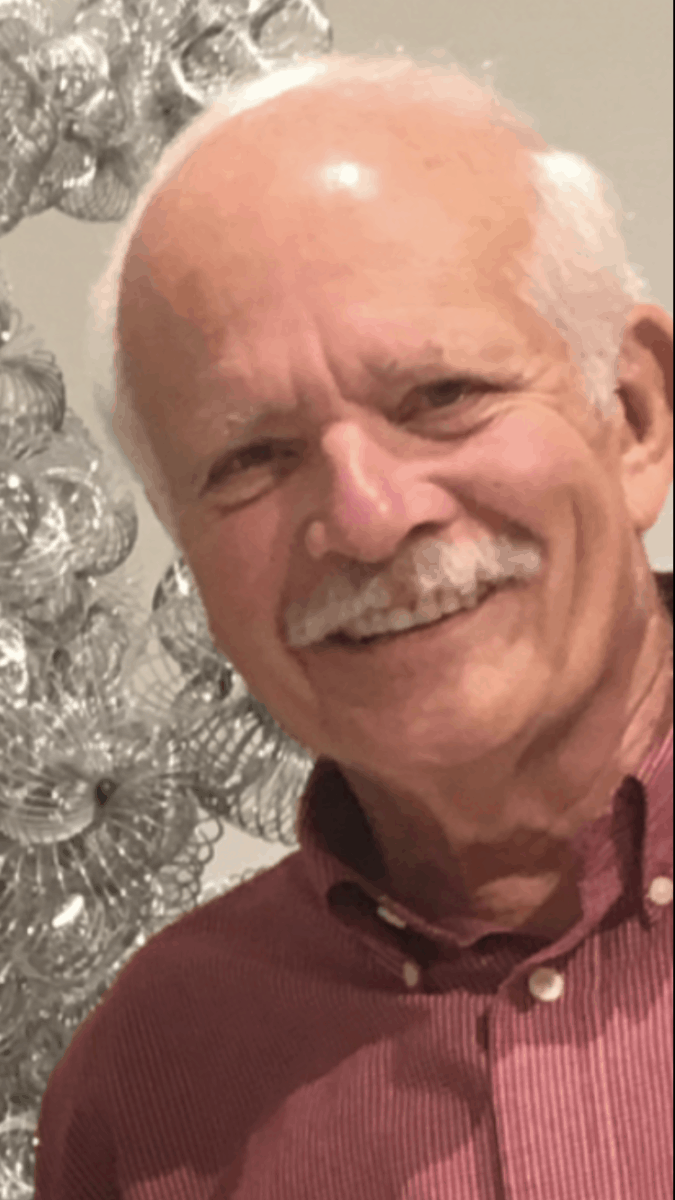
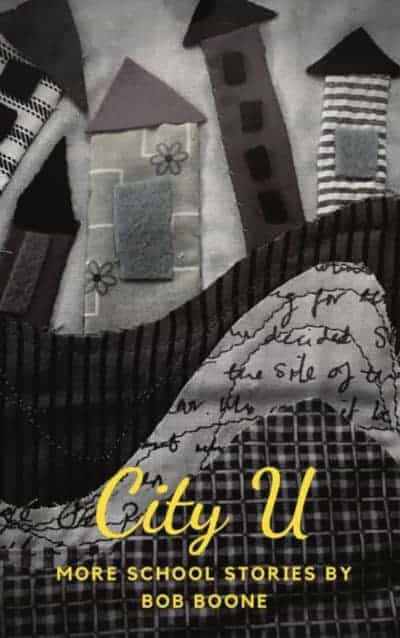
Bob Boone has led a very interesting life. To give you a glimpse into his depth of experience (professional and life), we caught up with Bob on the eve of the release of his latest book, City U. Eckhartz Press is proud to add this collection of short stories to our ever growing list.
You’ve previously written so many things, including a memoir, a great biography of Hack Wilson, a bunch of textbooks, and now this book–your third book of short stories. How is this one similar or different than your previous two short story collections?
Bob: Like FOREST HIGH, this collection of stories features characters and situations that are especially common in schools. Schools are busy places — full of people who find themselves in complicated situations. These are situations that matter deeply to those involved. In FOREST HIGH, the situations involve high school students and high school teachers. At City U, we find older students, returning students, foreign students, career counselors, parttime instructors, and many other folks with complicated lives.
What is it about the short story format that appeals to you, as opposed to more long-form writing like your memoir or Hack Wilson book?
Bob: I like to read novels and long pieces of non-fiction. I like to read books for kids. I like biographies and long novels. I like thrillers and mysteries.
I like all of those, but I especially love the short story. It’s my favorite form. I read and reread short stories. I read for enjoyment but also for inspiration. If a story works, for me I want to keep reading to find out why it works so well. I’ve read “Hair Cut” by Ring Lardner dozens of times and I do the same thing with stories by Alice Munro, Bernard Malamud, Anton Chekhov, and other great writers.,
Now I’m reading and rereading “Babes in the Wood” by Margaret Atwood and asking myself what does she do to make it work so well?
These all take place at a city college, and that seems like an obvious choice for a college teacher like yourself. How many of the characters (without naming names) from your stories are inspired by the actual people you meet in school?
Bob: My characters are not based specifically on particular people that I know from the schools. But people I know from the schools stick in my mind and give me ideas for my characters. I “know” the people I have invented – their dreams, memories; concerns; secrets; disappointments; opportunities; fear.
I know a guy like Clarence – a self-described expert who takes himself a little too seriously. I know athletes who returned their scholarships and older teachers who fought their way past booze and teachers who lost that battle.
In 2010, First Lady Michelle Obama presented you with an award for your work with kids in the city. Tell us a little more about that. It sounds like an exciting experience.
Bob: Visiting the White House was both satisfying and exciting because Young Chicago Authors, a program I had helped start, would be receiving an award for our work with young writers from the city.
It was also hectic. A YCA student and I flew to Washington DC in the morning. We took a cab to the hotel, and then, along with the fifteen other recipients, attended a meeting, where we learned what we were to do and when to do it.
That evening, we attended a dinner and a program at the Kennedy Center. The next morning, we went by a bus to the White House. We filed into the lobby, where two Marines led us to a small auditorium.
We sat down in designated seats and before long the First Lady appeared. She welcomed us and congratulated us, and then asked us to come up one at a time with our student. She read a short description of each organization and the reasons for its receiving an award. She presented each us with a plaque and then posed with us for a photo.
Before long, we were back on the bus and soon after that, on a plane flying back to Chicago.
Quite short, but long enough to leave a lasting memory
You’ve been in the Chicago area for a long time now, but you’ve also lived in New York and Germany. How does this city and its inhabitants inspire your work?
Bob: Since the late 70s, when I left regular teaching to become a freelance teacher, I have been all around the city. I ran a writing program at Avalon Park, I offered SAT/ACT programs for basketball players at Marshall High School and dozens of other high schools, I directed writing workshops at De Paul and Columbia College, I taught creative writing in the Seminar Sessions at Payton High School. And every Friday morning for several years, I drove down to Hubbard High School to help teach a class.
Often one place led to another. In 1985 I went to Avalon Park for a Creative Writing program for basketball players. Someone from Cabrini Green heard about this and invited me to come to the projects. I did and from that I got the idea for YCA.
Former #Cub Wimpy Quinn was born on this day in 1918. His #Cubs career was very short–he only played in three games in 1941. Wimpy acquired the nickname because his given name (Wellington) was the same as J. Wellington Wimpy, the comic book character from Popeye. #everyCubeverpic.twitter.com/hNcp8CYjpf
2021 marks our tenth year as a publisher, and every month we’ll be dipping into the archives to celebrate that anniversary.May has typically been a busy month at Eckhartz Press. For instance, check out some of these May moments from our authors Ken Korber, Roger Badesch, Tom Weinberg, Rick Kaempfer, Bob Shannon, Pat Colander, John Landecker, Randy Richardson, and Chuck Quinzio.
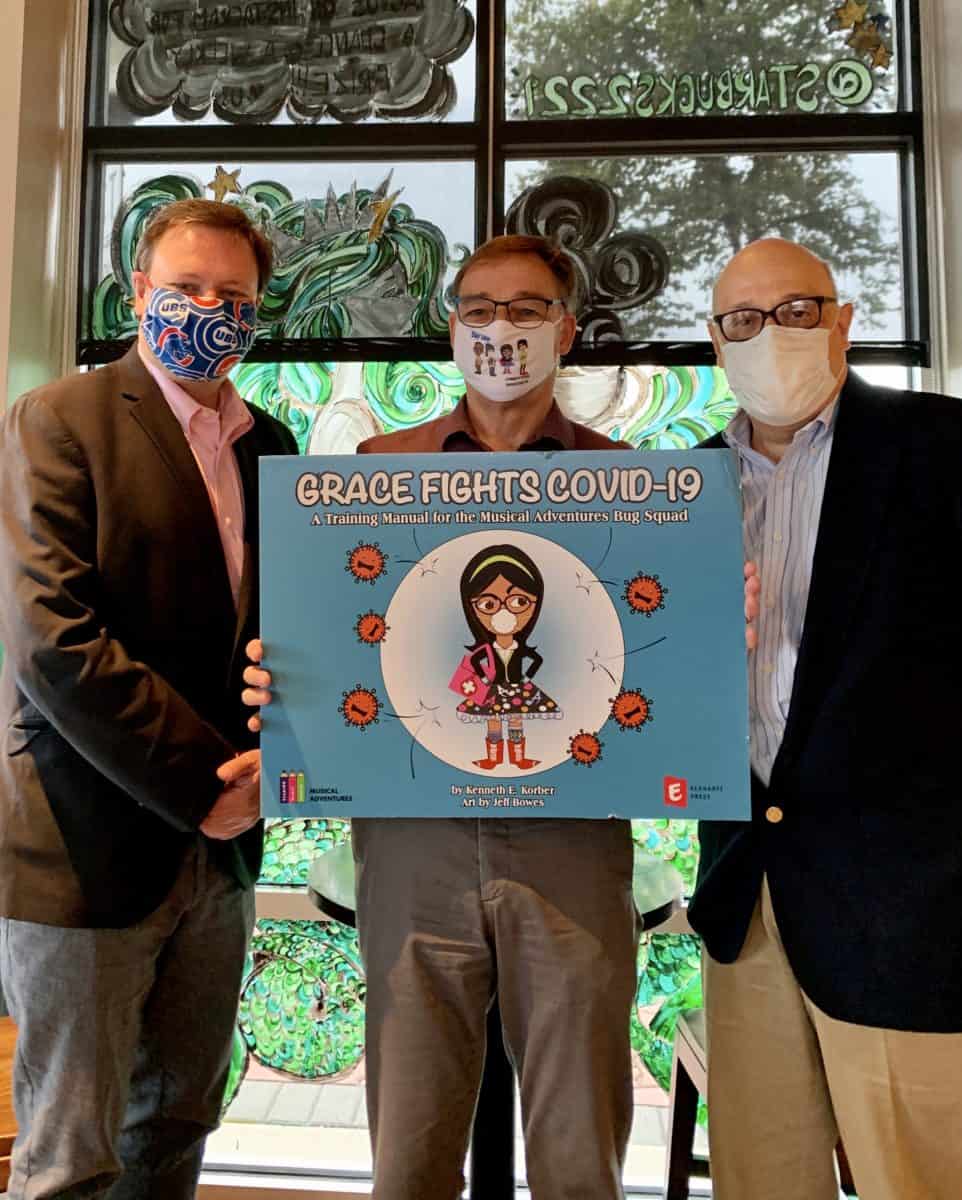
2020 was a very difficult year in the publishing business, but Eckhartz Press author Ken Korber addressed the number one issue on everyone’s minds, when he released his children’s book about COVID on May 1st, Grace Fights COVID-19. Here’s Ken with Eckhartz Press publishers Rick Kaempfer and David Stern with the oversized promotional cover…
Another book released in May of 2020 was the great memoir by WGN Radio newsman Roger Badesch, The Unplanned Life. He was interviewed by the EP blog about the reaction to his book, and here’s a short excerpt from that interview…
“Well, my wife says I was a royal troublemaker as a kid – and she’s already known most of my exploits from back then. A few readers have commented that they feel like I’m right there sharing stories with them – and I’ve heard that before when I’d tell stories during my air shifts on WGN Radio with Rick Kogan, Brian Noonan, Matt Bubala and Dave Plier, amongst others. One close friend, whom I’ve known for about 30 years, called me an ‘f-ing dork’ when she read how Bridget and I first met in Bloomington/Normal IL. And she meant that in the most loving way possible. That was awesome!”
In May of 2018, Eckhartz Press author Tom Weinberg was asked to appear on Chicago Tonight (WTTW-Channel 11) in Chicago to discuss his incredible book Chasing the Lost City…
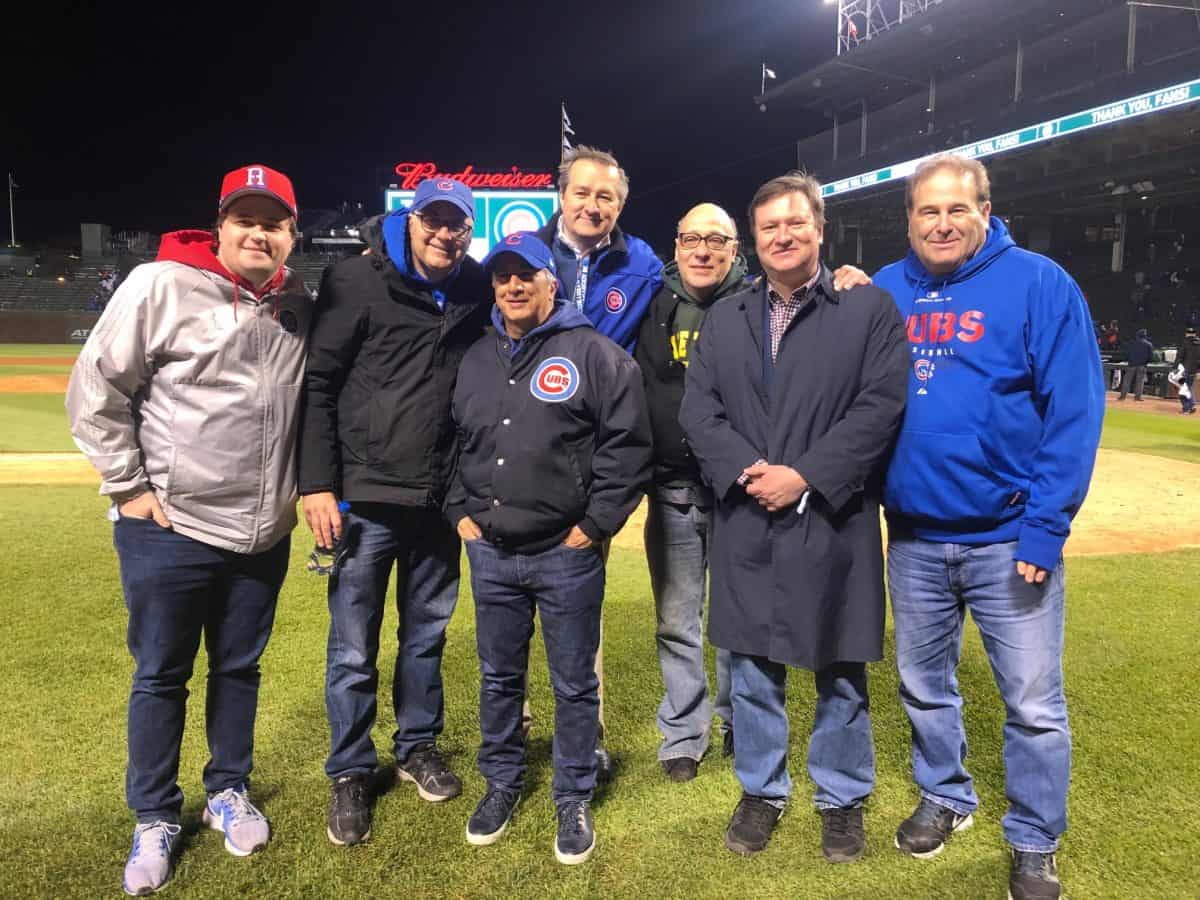
On the field at Wrigley, with among others Cubs owner Tom Ricketts
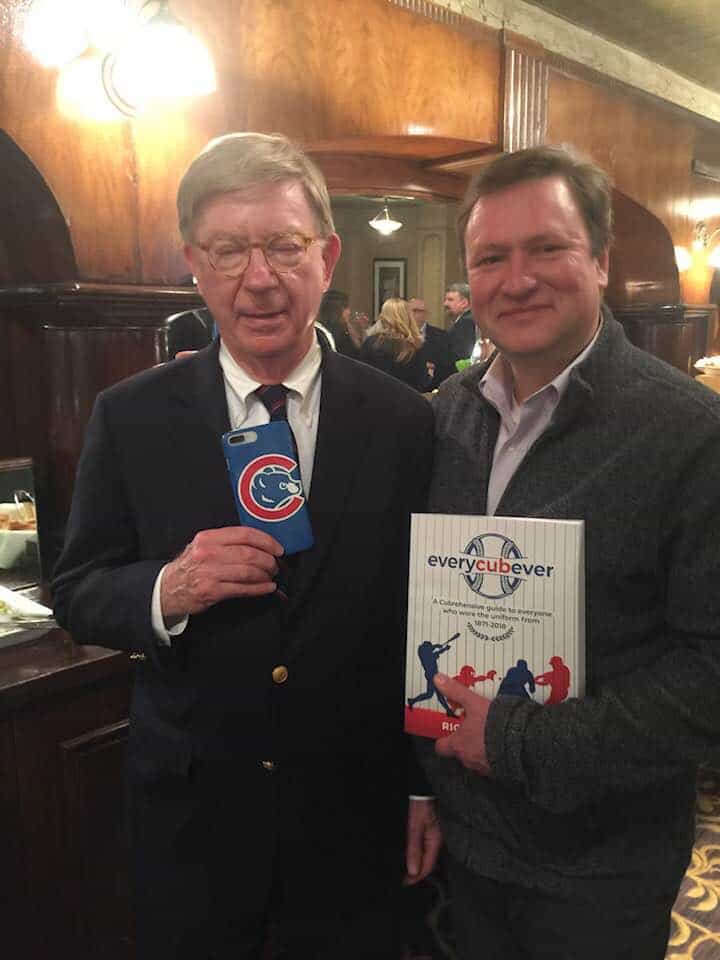
In May of 2019, Rick Kaempfer was making the rounds promoting the first edition of his book EveryCubEver. One of the stops, naturally, was Wrigley Field, and one of the eager readers was the owner of the Cubs, Tom Ricketts. Later in the month Rick discussed the book with life-long Cub fan/political pundit George Will…
George Will
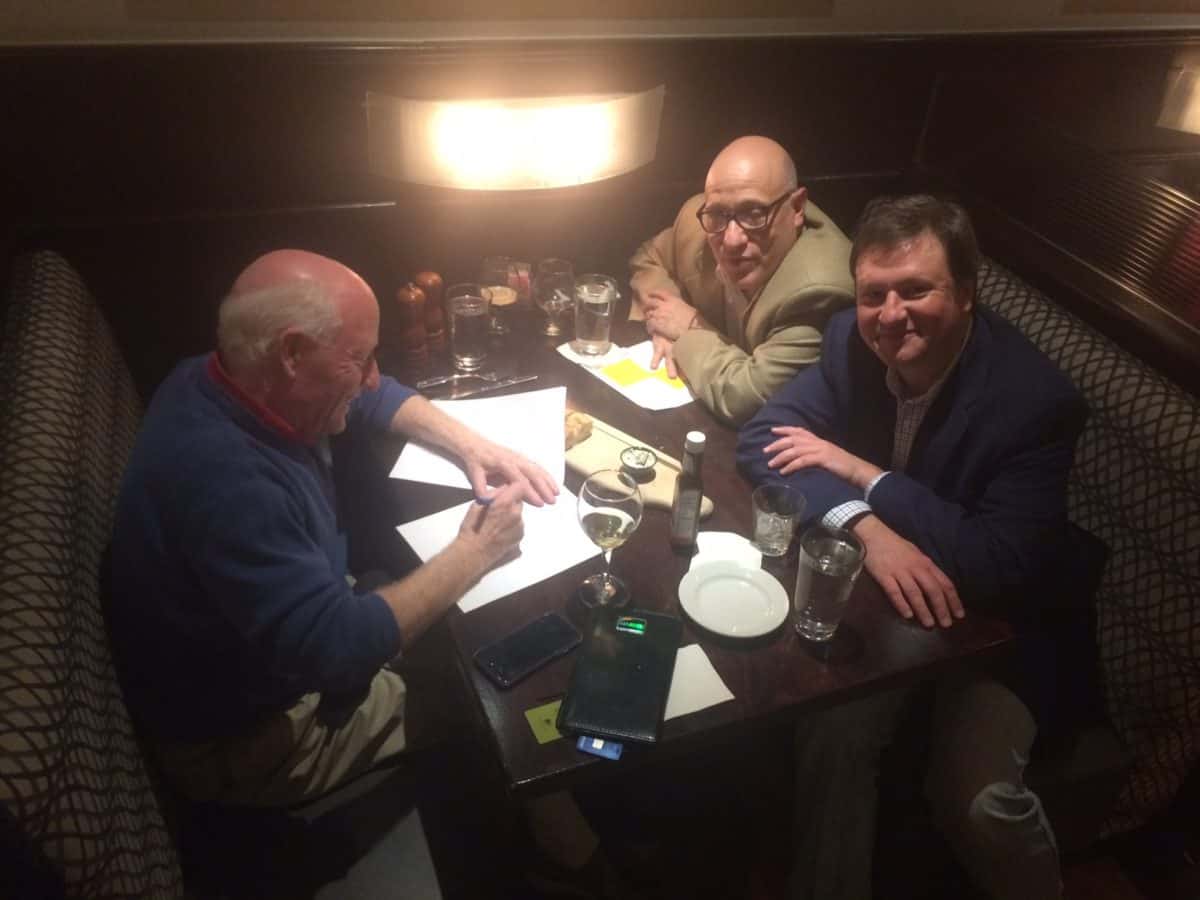
In May of 2017, Radio programming guru Bob Shannon drove down from his home in Minnesota to sign a contract with Eckhartz Press for his book, Turn it Up. It was a memorable day in the news. It was the day that Donald Trump fired James Comey. The scroll was running on CNN over the bar…
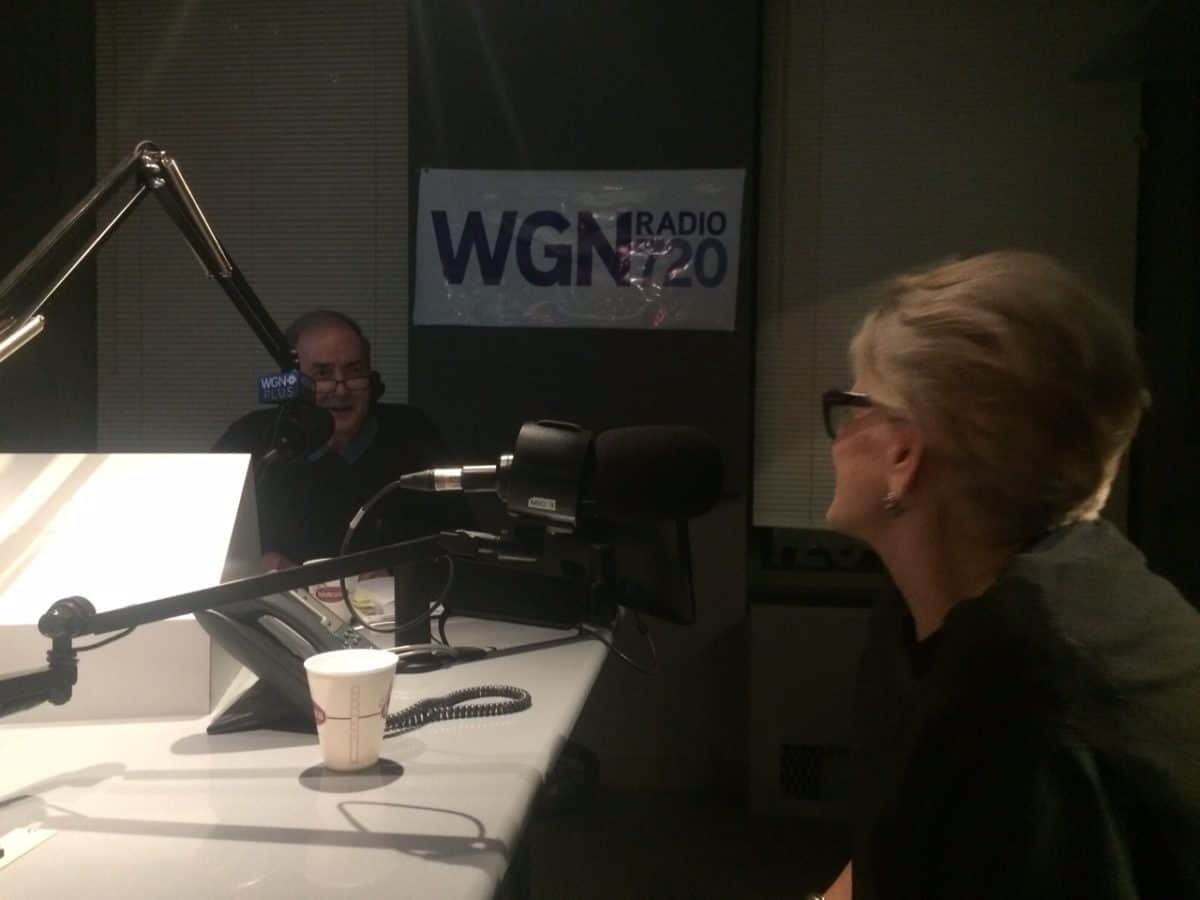
In May of 2016, Pat Colander appeared on Rick Kogan’s show on WGN Radio to promote her award winning (CWA Book of the Year) Hugh Hefner’s First Funeral. Pat and Rick had known each other for nearly four decades and the interview was warm and friendly…
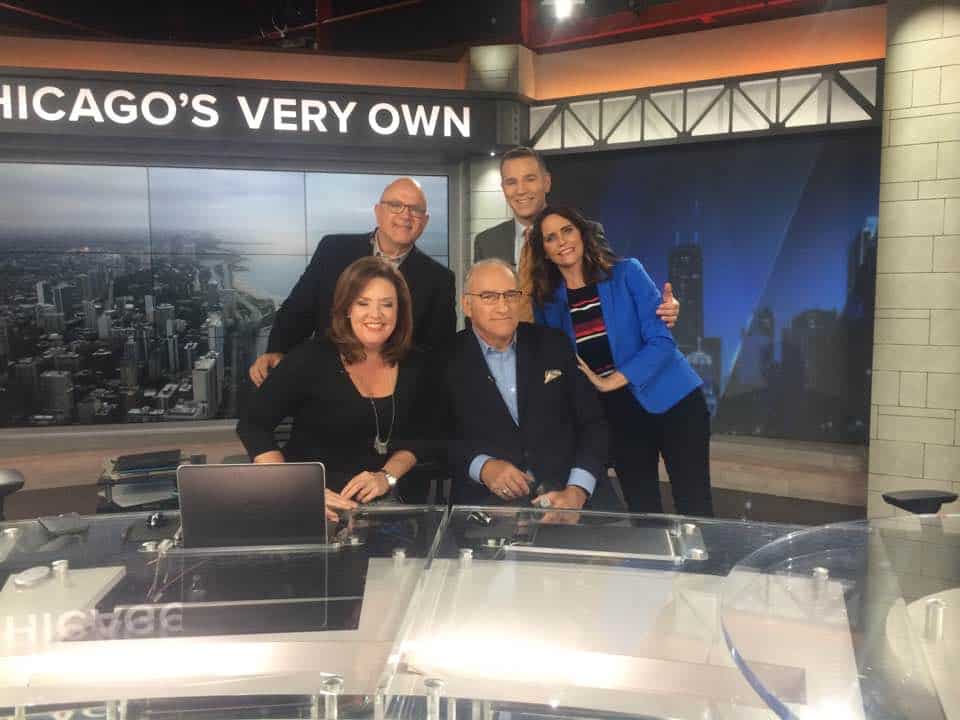
In 2015, John Landecker was making the rounds promoting his book Records Truly Is My Middle Name. His celebrity actress daughter Amy came to town to help, and they were everywhere, including WGN-TV…
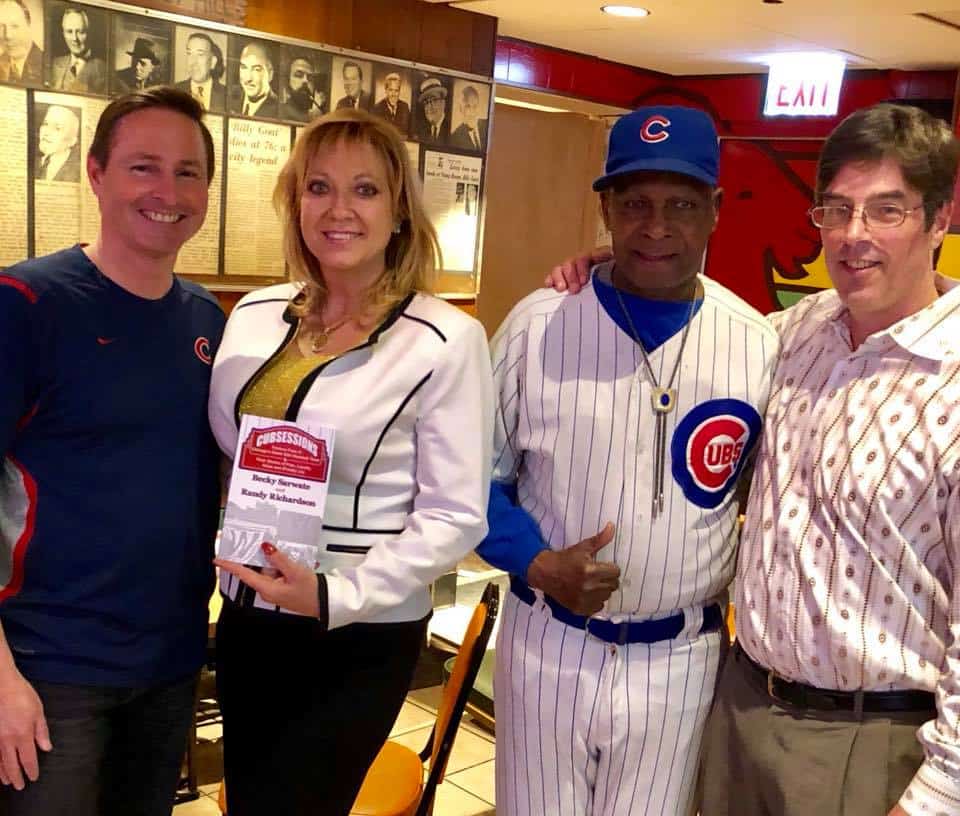
In May of 2018, Randy Richardson was out promoting the first edition of his book Cubsessions (co-written by Becky Sarwate-Maxwell). One of the more memorable events was his signing at the legendary Billy Goat Tavern. Among the attendees, former Cubs ballgirl Kathy Wolter, Ronnie Woo-Woo, and the Shawon-O-Meter man himself, Dave Cilha.
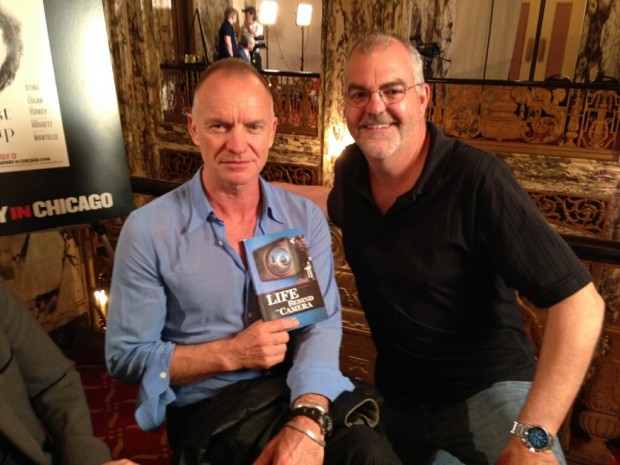
In May of 2014, Eckhartz Press author Chuck Quinzio (Life Behind the Camera) found a surprising ally in his book publicity…
What a fun interview with @mark_giangreco. He tells some hilarious stories about his many suspensions, our mutual friends Kevin Matthews and Chet Coppock, and his plans for the future. Well worth the listen. https://t.co/1BKLP1tMIB
Hard to believe we've been doing this for five years. It has been a joy. This episode includes the greatest sentence ever written and the story behind my love scene with Liesl from The Sound of Music. https://t.co/zPHturZjRy
I started my promotional campaign for my first novel $everance 14 years ago. I'll admit, my campaign was a touch unusual. This is my piece from May of 2007.
I've probably already told you about my satirical novel (“$everance”) that explains who and what really runs the
media, but you’d be surprised how difficult it is to get the word out in the
media about a book that exposes the truth about the media…
Some authors faced with such a seemingly insurmountable dilemma and an
advertising budget of zero, might be deterred or overwhelmed. Not me.
I’ve created the world’s first truly interactive billboard.
I know this looks like a very fancy billboard, but it’s really just my three
sons facing a blank wall, waiting for someone to walk by and look at it. When
someone does, this amazing billboard “comes to life.”
The first boy turns around and says: “Severance is available at www.encpress.com”
The second boy turns around and says: “It’s only $16 if you order right now.”
And the third boy is supposed to turn around and say,
"That's a heck of a deal for a "hysterical critique of corporate
morality" that is "told with the keen insight of an industry
insider", and is, take your pick: "laugh out loud funny",
"yeah, that funny", "brilliant satire", "great, funny,
sarcastic, and thought-provoking" or "whiplash-fast
choke-on-your-coffee funny"."
(All actual quotes from actual reviews. See them all here: Praise for $everance)
Unfortunately, he's only 4, and he usually says "Dad, this is
stupid."
I suppose I could try another way. I could ask people to help spread the word
by forwarding this e-mail to people who may enjoy the book. Or I could ask
people to suggest "$everance" for their book clubs. Or I could just
ask people to help rescue these children from the humiliating experience by
spending a measly $16 right now by clicking here (www.encpress.com)
Or.... the boy could learn his lines and deliver them with feeling. What are
they teaching these kids in pre-school these days?
Maybe we'll see you this summer. The boys and I will be traveling around the
country looking for blank walls that are just screaming for an interactive
billboard. With any luck, I'll sell enough books to allow them to go back to
school in the fall.
If not, acquiring the salesmanship skills and street smarts this project will
teach them will more than make up for what they miss in 6th grade, 4th grade,
and pre-Kindergarten, respectively. Don't you think?
Former #Cub Jim Hickman would have been 84 today. In 1970 at the age of 33, “Gentleman Jim” somehow had a career season (.315/32 HR/115 RBI/102 Runs) and got the game winning RBI in the All-Star Game (Pete Rose crashing into Ray Fosse). #everyCubeverpic.twitter.com/WslcvDDVrv
She was only 59. I contacted her a few months ago and we were in negotiation about her appearing on Minutia Men Celebrity Interview. That's obviously not going to happen now. In the 90s she was married to Angels pitcher Chuck Finley. In the 80s, she was the one on the rooftop of Whitesnake's car (when she was married to David Coverdale), and for me most memorably portrayed Tom Hanks' fiance in Bachelor Party.
Lloyd Price, the pioneering, Rock Hall-inducted R&B singer behind hits like “Lawdy Miss Clawdy,” “Stagger Lee” and “Personality,” has died at the age of 88 https://t.co/dTq5LrKnb2
The man of over 700 voices. He was nice enough to chastise my children for me in the voice of The Joker from the Batman video games https://t.co/b9RvMhenr5
Happy 141st birthday to former #Cub Mickey Doolin. Doc, as he was known, was part of the first Cubs team to play at Wrigley Field in 1916. The previous season Doolin had also called the ballpark home–as a member of the Federal League Whales. A slick fielding 2B. #everyCubeverpic.twitter.com/sROXZvP6he
The 51st anniversary of the Kent State massacre is an appropriate time to remember that innocent protesters have been slaughtered in the United States for many years. pic.twitter.com/8fvDVh5mib
Happy 129th birthday to former #Cubs pitcher Ted Turner (not *that* Ted Turner). Ted was a three-time convicted chicken thief before he joined the #Cubs, pitched in one game in 1920 (1 1/3 innings), then spent many years of his life in jail. He killed two men. #everyCubever
~George Gore 1854–1933 (White Stockings 1879-1886) Gore had one of the greatest nicknames of all-time; they called him Piano Legs. George was the centerfielder for the Cubs (then known as the White Stockings) during the team’s longest period of excellence. During Gore’s eight seasons, the team won the championship four times, including three years in a row (1880-1882). Piano Legs won a batting title (1880), hit over .300 six times, led the league in runs twice (1881-1882), and walks three times (’82, ’84, ’86), and still holds the club record most steals in a game (7). But George was also known as a big drinker and hell raiser off the field, and ran into constant conflict with team manager/captain Cap Anson. After the 1886 season, when some of the “drunks” on the team didn’t play up to their abilities in the World Series against St. Louis, Gore was shipped off to New York. (The others soon followed) In Anson’s book (which came out in 1900) he said that he saw Gore years later, and that his life had been ruined by “wine and women.”
The damage is done, and 40+ states are making needless laws to "secure voting", but at least one of the outlets being sued by Dominion has admitted they ARE FULL OF SHIT. (Of course, this news was announced quietly on a Friday afternoon).
Newsmax, OAN, and Fox News remain the poison that is destroying America.
From Forbes.com...
Right-wing cable outlet Newsmax settled a defamation suit brought by a Dominion Voting Systems executive Friday with an apology and admitted that allegations of voter fraud that it aired were untrue, the latest backtracking as Newsmax and other conservative outfits face legal retribution for amplifying former President Donald Trump’s baseless vote-rigging claims.
Dominion security director Eric Coomer filed a Colorado defamation lawsuit in December against Newsmax, competitor One America News, the Trump campaign and several Trump-affiliated lawyers, accusing them of falsely linking him to a vast, shadowy, high-tech (and nonexistent) plot to rig the 2020 election.
In a Friday afternoon statement, Newsmax acknowledged it had broadcast voter fraud claims against Coomer and admitted there’s no evidence any of them were true.
Newsmax also admitted it doesn’t have evidence that Coomer confessed to rigging the election during a conference call with antifa, an outlandish allegation repeated on-air by former Trump lawyer Sidney Powell, who is also facing a lawsuit from Coomer. Coomer dropped Newsmax from his lawsuit Friday after reaching a settlement with the network, his attorneys told Forbes in a statement, though they did not offer any details on the terms of the settlement.
Newsmax pointed Forbes to its statement and declined to comment further.
SURPRISING FACT
Coomer’s lawsuit says he suffered death threats because of the false allegations leveled against him, forcing him to flee his home and go into hiding.
CRUCIAL QUOTE
“On behalf of Newsmax, we would like to apologize for any harm that our reporting of the allegations against Dr. Coomer may have caused to Dr. Coomer and his family,” the network said in a statement posted to its website Friday.
Happy 141st birthday to former #Cubs minority owner Albert Lasker. Lasker was an advertising pioneer (Foote, Cone & Belding). He was also one of the men in the smoke-filled Chicago hotel room, Suite 4046 of the Blackstone Hotel, who nominated Warren Harding for President in 1920 pic.twitter.com/4z8dgnXjwn
It's May Day, and in #everyCubever world that could mean Derrick May, Scott May or Jakie May. Jakie was a 5'8" lefty who pitched for the #Cubs in '31/'32. He retired after the 1932 World Series loss to the Yankees. The bombers rocked him for seven runs in only two innings. pic.twitter.com/yw4Junnz7G
This week marked the anniversary of Casey Kasem’s birth. Bob Shannon’s excellent book about radio (“Turn it Up”) has entire chapter about the radio legend. Today we present it to you as a free excerpt…
|Casey Kasem: America‘s Top Countdown Host
He was working at KEWB/Oakland-San Francisco. It was 1962 and he was the night jock. His name was Casey Kasem and he was a “wild-tracker.”
The show was scripted. It had to be for the engineer to keep up. He used audio drops – funny stuff, clips from movies, TV, records – anything he could get his hands on and bounce off of. He was as fast as a brakeless cable car; so frenetic that he drove one of his engineers to drink; yes, it’s true. Some nights Kasem would get to work, look at old red-eyes and know he was in trouble. He’d been doing the show for about a year and a half when the General Manager asked to see him.
“Casey,” said John McRae, “I’m changing things and I want you to stop wild-tracking.”
Kasem stared. “What do you want me to do, John?”
“Be a regular disc jockey.”
Kasem didn’t need to be told that the other wild-trackers at the station had been fired. He needed some direction, though. “Talk about the artists, the music,” said McRae. “And, by the way, start doing it tonight.”
“I figured I’d do time, temperature and weather,” he says, “and be out of a job the next morning.”
He was 30 years old and thought his career was over.
Kamal “Casey” Kasem wanted to be a radio actor. George Shapiro, the Radio Club’s sponsor at Detroit’s Northwestern High, was skeptical. “Do you have any idea what the average radio actor made last year?” he asked.
Kasem answered, “No.”
“Fifty dollars,” replied Shapiro.
Kasem was between high school and college. He’d done a sports show over the high school PA system – he still has the scripts, he says – but he wanted to do more radio, even if it didn’t pay.
“Shapiro recommended me to WDTR,” he says. “I became the chief sound effects man and did some drama, too.”
In the early ’50s, radio drama was still alive. “Detroit was the home of a few network shows,” Kasem says. “The Lone Ranger was on ABC and Challenge of the Yukon was on Mutual. And they both had the same cast.”
In 1950, because of a part he played on WJR/Detroit’s “Scoop Ryan – Cub Reporter,” – a 15-minute show presented by the Wayne State Radio Guild – Kasem was invited to audition for “The Lone Ranger.”
“I had the voice range to play anyone from 12 to 20,” he says. When he got the part, his national debut, were his parents impressed? “No,” says Kasem, “They just expected me to be successful. But, I do remember my Grandmother saying, ‘Maybe one day you’ll be like Arthur Godfrey.’”
In 1952, Kasem was drafted and sent to Korea.
Believe it or not, the Army actually gave him a broadcasting assignment. “There were nine radio stations,” he says, “and I created a production team at headquarters to do comedy and drama.”
Then destiny reared its head. “There was a Saturday night Top 10 countdown show and they asked me to fill in,” he explains. All was going well until he hit the #1 song, Les Paul and Mary Ford’s Vaya Con Dios. “I said, ‘here’s the song that’s #1 in America from coast to coast: ‘Go Buy a Dose.'” (Casey assures me it was funnier than it reads.)
Out of the Army and back in Detroit, Kasem re-joined The Lone Ranger cast, went back to college, started acting – he did summer stock with George C. Scott – and dabbled on the air at WJLB and WJBK/Detroit. He says he really didn’t want to be a disc jockey. “I just fell into it.” But, when he filled in on a popular night-time show and the ratings sky-rocketed, he stayed. Within three months, he was the #1 disc jockey in Detroit.
What happened next may surprise you.
“I quit,” says Kasem “I left at my peak and went to help my parents in their grocery business.” The family needed help and so, he worked 17 hours a day, 7 days a week – stocking, packing, and mopping. “I did it for a year, but it paid off. We quadrupled business and I was able to go to New York to become the serious actor I was hoping to be.”
It was June of 1958.
Today, Eugene Victor Walsk is a successful New York Producer, but back then, he was just another Wayne State graduate starting his career. When Kasem arrived in New York some Army buddies threw him a welcoming party. Walsk was there.
“I’ve got to be able to audition,” Kasem told him. “Do you know of anything?”
Walsk sent him to audition for the part of a “drunk, gay Russian” in the #1 off-Broadway play that season, “Ivan of.”
“I did really well,” Kasem remembers. “The guy I auditioned for was so impressed that he called others in to see me, and I did it again. I knew I was going to get that part.”
He didn’t.
Thirty years later he discovered he lost out to Ed Asner. “I didn’t get it, but I feel better now that I know I lost it to a guy who’s won six Emmys,” says Kasem. .
He went in for another audition, but it was over before it began. Kasem took stock of his situation; he had no money, not even enough for a cup of coffee. “After six months I put my tail between my legs and went home.”
When he says “home,” he means Detroit. He could just as well have meant “radio.”
Back in Detroit, Kasem started looking for work. “I put feelers out and sent off some tapes,” he says. “Milwaukee wanted me, but then the people at WJBK heard I was back in town.”
WJBK was owned by Storer Broadcasting and its sister station in Cleveland, WJW, had just flipped to a pop format and wanted Kasem, too. “I went there,” he says,”because they also offered me the Cleveland Bandstandshow.”
Cleveland is the city where Kasem started wild-tracking and calling himself Casey At The Mike. “I was looking for something to keep me on the edge of my seat,” he says. “Wild-tracks were the answer.” WJW was mostly a pop station playing artists like Perry Como and The McGuire Sisters, but at night Kasem leaned heavily on rhythm and blues. Smart move.
Within three months he was #2 in Cleveland, right behind WHK. This success took him to WBNY/Buffalo, but it was short lived, he says. “I was fired because I was insubordinate.”
Then Chuck Blore entered his life. Blore programmed KFWB/Los Angeles but had also taken on corporate responsibilities for Crowell-Collier Broadcasting, as it prepared to buy WMGM/New York, where Blore wanted to send Kasem. When the FCC killed the deal, Blore sent him to KEWB/Oakland-San Francisco instead.
There, in a trash can by the control room door, Kasem found something that changed his life.
Farley McLuth was the janitor at KEWB and he was running late.
“There was a big trash barrel wedged in the door that was piled high with reams of news copy,” recalls Kasem. “On top of it all was a magazine, “Who’s Who in Pop Music in 1962.” .
The magazine was full of thumbnail sketches – birthdays, first hits, favorite foods, etc. Kasem says he knew he was on his way. “I’d always teased upcoming records,” he says. But this was different: people, lives, feelings – storytelling.
“Coming up,” Kasem said, “the man who’s had more #1 records than anyone else since the beginning of the rock ‘n’ roll era.” Sound familiar?
“Ten seconds later and Farley might have moved that trash can,” says Casey Kasem. “It was supposed to be there for me to see.”
In May of 1963 Kasem went to work for KRLA/Pasadena-Los Angeles. Bill Drake’s and Ron Jacobs’ version of KHJ was two years away, so KRLA’s only direct competition was KFWB. “Within three months, I was #1,” says Kasem, adding that, for KFWB, things were heading from bad to worse. In the spring of 1964 KRLA embraced The Beatles and the British invasion, which KFWB ignored. “That was all she wrote for KFWB,” Kasem says.
He did mid-days at KRLA, but his real goal was to use the station as a launching pad for voice-overs, TV, even movies. In late ’63 KRLA had collaborated with LA’s Channel 13 to do a local music show. “My job was to introduce two people who’d died – Johnny Horton and Sam Cooke,” says Kasem. The script was rough, so he asked if he could ad lib his part. “I did them both in one take.”
Several weeks later, Kasem ran into Bob Lee, the producer of a new, as-yet-unnamed Dick Clark Production that would become “Shebang.” Lee told Kasem that the work he’d done on Channel 13 was terrific. ”We’d like you to come down and talk to us about hosting a new show we’re putting into syndication.”
Kasem did; they did a deal and production began, but the show never was syndicated nationally, although it did become a hit in Hollywood. “I did “Shebang” for two years. It went off and then, by popular demand, it came back,” Kasem says. Six hundred and fifty episodes later, he was established on Los Angeles TV.
Did I mention movies? Kasem chuckles when he recalls his first flick, Dennis Hopper’s “The Glory Stompers.” “I played a bad guy, a motorcycle bandit,” he says.
In 1967, at the insistence of his friend, record mogul Mike Curb, Kasem tried his hand at voice-overs. His first hit was as the voice of Robin in the “Batman and Robin” cartoon. “That was the beginning,” he says. “Eventually I did several other features, including “Josey and The Pussycats” and letters and numbers (a segment) on “Sesame Street.”
I don’t have to tell you about “Scooby-Do,” do I?
In 1968 Kasem became the voice of Shaggy in the cartoon series. The role lasted for 23 years and Kasem says there’s always talk it may come back. In 1976 he was hired by NBC television and, over a period of five years, he recorded over 25,000 promos for the network. But still, and always, there’s “American Top 40,” a national institution. According to Ron Jacobs, AT 40 is the most listened to program in the history of radio. “I can’t imagine it having done so without Casey’s energy and creative contributions,” he says.
On January 4, 2004 Kasem turned hosting duties for “American Top 40” over the Ryan Seacrest, the host of “American Idol.” As of this writing he continues to produce “American Top 20” and “American Top 10” for Premier Radio Networks.
Perhaps, more than anything else, Kasem’s success comes from his connection with his audience. “We’ve flown together,” says Marty Raab, a vice president at Premier Radio, “and people will stop and say, ‘Casey, I’ve listened to you all of my life,.’ or, ‘I remember a long distance dedication you did and the song you played.'”
Casey Kasem was given his star on the Hollywood Walk of Fame in 1981. Eleven years later, in 1992, he became the youngest broadcaster in history to be inducted into the Radio Hall of Fame. Then, in 1997, two years after being inducted into the National Association of Broadcaster’s Hall of Fame, “Billboard” magazine awarded him its first-ever Lifetime Achievement Award.
Kasem’s success is well earned. Perhaps it has something to do with the philosophy expressed in his optimistic “American Top 40” sign-off.
“Keep your feet on the ground and keep reaching for the stars.”
A tribute to Bushes, Forrests, Trees, and Woods in honor of Arbour Day…
~Guy Bush 1901 (Cubs 1923-1934) The Mississippi Mudcat got his nickname because he came from Mississippi and had a very strange delivery. It was described like this by F.C. Lane in Baseball Magazine (1930): “On the hurling mound (Guy) Bush has developed a curious ‘hop-toad’ lunge that is unique. When he really bears down on the ball, he actually springs forward and finishes up in a squat position like a catcher reaching for a low pitch.” He won 150+ games for the Cubs, as a starter and reliever (he led the league in relief wins 4 times). On May 4, 1927 he pitched 18 innings in one game, when the Cubs beat the Braves 7-2. He started and won Game 3 of the 1929 World Series against the A’s, giving up only one run. He also pitched Game 1 of 1932 Series against the Yankees, but this time the results weren’t quite as good. He was shelled for eight earned runs in less than six innings. The Cubs traded him to Pittsburgh in 1935. Bush always said the secret to his success was a “secret dark liniment” that the Cubs trainer rubbed into his arm. He didn’t find out until after he was traded that the secret liniment was only Coca Cola. On May 25, 1935, he came in as a relief pitcher for the Pirates against the Boston Braves. In that game he gave up the last two home runs in Babe Ruth’s career. (Photo: 1933 Goudy Baseball Card)
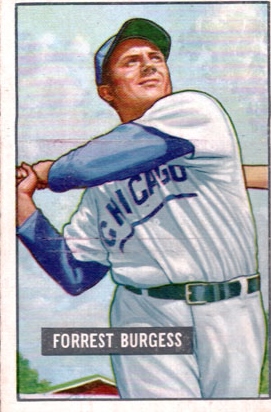
~Smoky Burgess 1927 (Cubs 1949-1951) His real name was Forrest Harrill Burgess, but no-one called him that. He was Smoky Burgess, a five-time National League All-Star. He was a very good catcher, but he became even better known as one of the best pinch hitters of his era. He retired with a record 507 pinch at-bats. Only Lenny Harris, Mark Sweeney, and Manny Mota have more than Burgess’s 145 pinch hits. Unfortunately, none of that happened with the Cubs because they traded him after his second season in the majors (1951) for little remembered Johnny Pramesa and Bob Usher. If he had stayed with the Cubs, he could have been their starting catcher for a decade. (Pramesa played 22 games for the Cubs, Usher played 1.) Smoky always said that his most satisfying pinch hit was his home run off Cubs pitcher Sam Jones with two games left in the 1956 season. The Reds, his team at the time, were going for the record–most home runs by a team in a season. The record was 221, and when Smokey came up to bat, the Reds had 220. Reds manager Chuck Dressen ordered Burgess to pinch hit for Roy McMillan, and said, “Make it a home run – or nothin’!” The ball landed on Sheffield Avenue. Smoky ended his career as a pinch hitter for the White Sox—and played until he was 40 years old. (Photo: 1951 Bowman baseball card)
~Rocky Cherry 1979 (Cubs 2007) Blessed with one of the great names in baseball history, Cherry was a journeyman pitcher who pitched out of the bullpen for the Cubs during their playoff year of 2007. Unfortunatly for Rocky, he wasn’t around anymore when the team made it to the playoffs. He was traded in August for Steve Trachsel.
~Woody English 1906 (Cubs 1927-1936) Woody was an all-star shortstop for the Cubs, but he also played quite a bit at third base. He was part of three Cubs pennant winning teams (1929, 1932, & 1935). Woody would have had a chance to be a hero in Game 6 of the 1935 series, but he and his buddies on the Cubs bench razzed the umpire so loudly that the entire bench was kicked out of the game. Instead of Woody going up to pinch hit in the 9th, with the winning run on third base, Charlie Grimm had to let his pitcher Larry French bat. French stranded Stan Hack on third and gave up the series winning run in the bottom of the inning. English was traded to Brooklyn in 1937 and finished his career with the Dodgers.
~Kerry Wood 1977 (Cubs 1998-2008, 2011-2012) He wasn’t even 21 years old when he came up to the majors in May of 1998, but he made his mark right away. On May 6, 1998, he took the mound on a very cold and wet day in Wrigley Field, and pitched one of the best games in Major League history. Before he was through he had struck out 20 Houston Astros batters, allowed only one infield hit, and electrified an entire city. By the end of the day, he was forever branded Kid K. He won the Rookie of the Year award that season after striking out 233 batters in only 166 innings, and leading the Cubs to the playoffs. Though Kid-K had his injuries during his Cubs career (he missed the entire 1999 season and long stretches of two other seasons), he was also on the mound for the greatest triumphs in Chicago Cubs history over the past fifty years. In 2003 he was the winning pitcher in the game that gave the Cubs their only playoff series victory. He also pitched magnificently in the NLCS that year, though his luck did run out in Game 7. In 2008 he was the closer during that magical season (which, sadly, ended so disappointingly). Wood came back in 2011 to end his career in his adopted home town. (Photo: 2003 Upper Deck Baseball Card)
~Travis Wood
The Cubs got Wood in the Sean Marshall trade, and he has become one of their most reliable starters. In 2013, he started the season with nine quality starts, becoming the first pitcher since Three Finger Mordecai Brown in 1906. His greatest day as a Cub probably came when he hit a grand slam homer against the arch-rival White Sox. He was named to his first All-Star game just a few days later.
~Gary Woods 1954 (Cubs 1982-1985) He was a backup outfielder for the Cubs in the early to mid 80s, and hit in the .240s during his stay on the North Side. He also played for Oakland, Toronto, and Houston. Gary passed away in February of 2015. (Photo: 1986 Fleer Baseball Card)
~Jim Woods 1939 (Cubs 1957) Woody, as he was known, was only 18 years old when he made his big league debut for his hometown Cubs. The recent Lane Tech grad didn’t get a chance to bat, but he appeared in two games as a pinch runner (for catcher Gordon Massa), and a scored a run. Neither of those appearances were in front of his home town fans. They were in Busch Stadium in St. Louis. Just a few years later he was part of the trade that brought Hall of Famer Richie Ashburn to the Cubs. Woods had a brief cup of coffee with the Phillies in 1960-1961, and hit three homers.
~Walt Woods 1875 (Orphans 1898) Walt was in the rotation for the Cubs (then known as the Orphans) in 1898 and started 22 games. To say he didn’t have a strikeout pitch would be an understatement. In 214 innings pitched, he struck out only 26 men. Woods later pitched for Louisville and Pittsburgh.
"The tallest mallard duck to have ever lived (since records began) known as 'Long Boi.' He lives on the campus of the University of York, England. He stands just over 1m tall (3.5ft)." pic.twitter.com/YMQVRlfCb5
Happy 146th birthday to #Cubs pitcher Walter Woods. Walt was in the rotation for the Cubs (then known as the Orphans) in 1898 and started 22 games. To say he didn’t have a strikeout pitch would be an understatement. In 214 innings pitched, he struck out only 26 men. #everyCubeverpic.twitter.com/WYodfGPA8Q