On this day in 2002, Cubs phenom Mark Prior made his Major League debut.
The incredibly hyped Prior didn't disappoint. He struck out ten Pittsburgh Pirates (including future Cub Aramis Ramirez three times), walked two, and allowed two runs in six solid innings of work. Sammy Sosa homered, Fred McGriff drove in a pair, and the Cubs beat the Pirates 7-4.
Prior went 5-6 the rest of the year, but put it all together the following season, leading the Cubs to the National League Championship Series.
Unfortunately, we could find no record of what happened in that series, or what happened to Prior in the years following that series. One can only presume that he led the team to many consecutive World Series titles.
Musings, observations, and written works from the publisher of Eckhartz Press, the media critic for the Illinois Entertainer, co-host of Minutia Men, Minutia Men Celebrity Interview and Free Kicks, and the author of "The Loop Files", "Back in the D.D.R", "EveryCubEver", "The Living Wills", "$everance," "Father Knows Nothing," "The Radio Producer's Handbook," "Records Truly Is My Middle Name", and "Gruen Weiss Vor".
Tuesday, May 22, 2012
Monday, May 21, 2012
The VVA Reviews "The Living Wills"
In the May/June issue of the Vietnam Veterans of America magazine ("Veteran"), esteemed Vietnam writer and veteran Marc Leepson reviewed "The Living Wills". Brendan and I are thrilled to get the seal of approval from this great organization. The headline of the review was: "Good-Hearted Veteran Cast Populates "The Living Wills". The review is not available on-line yet (when it is, I'll post a link), but in the meantime, here is an excerpt...
Two author novels are rare. The main reason: Writing fiction is such an intimate, personal business that it's extremely difficult for two people to come up with one literary vision, not to mention implement it. So you have to give credit to Rick Kaempfer and Brendan Sullivan, the two authors of "The Living Wills" (Eckhartz Press, 336 pp, $15.95 paper), a fast-reading novel set in Chicago in 2005, for coming up with a creditable work of fiction. Kaempfer is a Chicago writer and Sullivan is an improv artist in the City of Big Shoulders.
How did the two men put the book together? "We improvised the story lines together using (Sullivan's) techniques," Kaempfer explained, "before sitting down to plot it out and write the chapters of the book--it was a completely collaborative process." The authors "didn't set out to write a Vietnam book," Kaempfer said, "but when we improvised, it simply emerged."
How did the collaboration turn out? Not badly. The dialogue-heavy story hums along rapidly. It's a multi-character affair, centering on veteran Henry Stankiewicz and his late-in-life effort to make amends with his upwardly mobile lawyer son. It's not an easy task, as young Peter is extremely bitter about having suffered from an absent father for most of his childhood while the elder Stankiewicz struggled with postwar emotional and physical issues.
Several interwoven subplots include one involving a depressed middle-aged corporate type and another centering on a group of Henry's bowling buddies. There's also Peter's struggles with his work situation in a big law firm and his relationship with his girlfriend, who happens to be a lawyer at the firm. The main plot deals with something that happened to Henry in Vietnam, and the continuing fallout from that traumatic event in his life and in the lives of a group of his war buddies.
Henry and the other Vietnam veteran characters in the book are good-hearted men who have (to one degree or another) overcome their war-related emotional and physical problems. Henry holds down a blue-collar job, is happily married to a good woman, and has a positive mental outlook. One of his buddies still struggles with alcohol; another is a well-adjusted family man. In other words, the authors have come up with a cast of realistic, non-sensationalized Vietnam veterans living out their lives in the early 21st century--no Nam vet stereotypes here...
The Living Wills is a more-than decent novel filled with sympathetically drawn Vietnam veteran characters. That in itself is worth the price of admission.
Two author novels are rare. The main reason: Writing fiction is such an intimate, personal business that it's extremely difficult for two people to come up with one literary vision, not to mention implement it. So you have to give credit to Rick Kaempfer and Brendan Sullivan, the two authors of "The Living Wills" (Eckhartz Press, 336 pp, $15.95 paper), a fast-reading novel set in Chicago in 2005, for coming up with a creditable work of fiction. Kaempfer is a Chicago writer and Sullivan is an improv artist in the City of Big Shoulders.
How did the two men put the book together? "We improvised the story lines together using (Sullivan's) techniques," Kaempfer explained, "before sitting down to plot it out and write the chapters of the book--it was a completely collaborative process." The authors "didn't set out to write a Vietnam book," Kaempfer said, "but when we improvised, it simply emerged."
How did the collaboration turn out? Not badly. The dialogue-heavy story hums along rapidly. It's a multi-character affair, centering on veteran Henry Stankiewicz and his late-in-life effort to make amends with his upwardly mobile lawyer son. It's not an easy task, as young Peter is extremely bitter about having suffered from an absent father for most of his childhood while the elder Stankiewicz struggled with postwar emotional and physical issues.
Several interwoven subplots include one involving a depressed middle-aged corporate type and another centering on a group of Henry's bowling buddies. There's also Peter's struggles with his work situation in a big law firm and his relationship with his girlfriend, who happens to be a lawyer at the firm. The main plot deals with something that happened to Henry in Vietnam, and the continuing fallout from that traumatic event in his life and in the lives of a group of his war buddies.
Henry and the other Vietnam veteran characters in the book are good-hearted men who have (to one degree or another) overcome their war-related emotional and physical problems. Henry holds down a blue-collar job, is happily married to a good woman, and has a positive mental outlook. One of his buddies still struggles with alcohol; another is a well-adjusted family man. In other words, the authors have come up with a cast of realistic, non-sensationalized Vietnam veterans living out their lives in the early 21st century--no Nam vet stereotypes here...
The Living Wills is a more-than decent novel filled with sympathetically drawn Vietnam veteran characters. That in itself is worth the price of admission.
Cubs 365, May 21
On this day in 1935, the immortal Babe Ruth played his last game at Wrigley Field.
Ruth was a shell of his former self, struggling to stay afloat with the Boston Braves. And he made three outs his first three times to the plate, but in his last at bat ever in Wrigley Field, Babe Ruth stepped up to the plate against Cubs reliever Tex Carleton.
Tex grooved one, and Babe showed he still knew what to do with it, knocking the ball into the bleachers for a home run.
Babe was removed from the game after that homer, and tipped his cap to the Wrigley fans one last time. He retired from baseball just nine days later.
By the way, the Babe's in the news today too. His 1920 jersey just sold for $4.42 million, a record for an item of sports memorabilia.
Ruth was a shell of his former self, struggling to stay afloat with the Boston Braves. And he made three outs his first three times to the plate, but in his last at bat ever in Wrigley Field, Babe Ruth stepped up to the plate against Cubs reliever Tex Carleton.
Tex grooved one, and Babe showed he still knew what to do with it, knocking the ball into the bleachers for a home run.
Babe was removed from the game after that homer, and tipped his cap to the Wrigley fans one last time. He retired from baseball just nine days later.
By the way, the Babe's in the news today too. His 1920 jersey just sold for $4.42 million, a record for an item of sports memorabilia.
Sunday, May 20, 2012
Father Knows Nothing
My latest Father Knows Nothing column is entitled "The Reason My Home Looks Like a Crime Scene"
You can read it here.
Cubs 365, May 20
On this day in 1946, Cubs pitcher Claude Passeau did something he almost never did. He made an error. It was his first error since September 21, 1941. In that 4 1/2 years of errorless ball, Passeau fielded 273 consecutive errorless chances.
That's still the all-time record for a big league pitcher.
They didn't hand out Gold Glove awards yet in those days, but if they did, Claude Passeau would have won five of them. He also won no fewer than 14 games in each of those seasons.
That's still the all-time record for a big league pitcher.
They didn't hand out Gold Glove awards yet in those days, but if they did, Claude Passeau would have won five of them. He also won no fewer than 14 games in each of those seasons.
Saturday, May 19, 2012
Green White
One of my on-going writing projects is writing the history of Green White Soccer Club, a club co-founded by my father in 1956. Each month I write about one year in Green White history. The goal is to have a completed book by 2016, the year of the club's 60th anniversary.
This month it's 1964.
Chicago Radio Spotlight: Justin Kaufmann
This week's Chicago Radio Spotlight is an interview with Justin Kaufmann, the executive producer of midday programming for Chicago's NPR station, WBEZ.
You can read it here.
Cubs 365, May 19
On this day in 1929, future Cub pitcher Curt Simmons was born. He was a three time all-star that led his team to a World Series title, but of course, that team was not the Cubs.
Curt Simmons was only two seasons removed from taking the Cardinals to the 1964 World Series when the Cubs acquired him in 1966. They hoped they were getting the pitcher that started two games in that memorable '64 series against the Yankees, after winning 18 games in the regular season.
They weren't. They were getting a 37-year-old pitcher at the end of a very nice career.
Simmons won 193 games during his 20-year baseball career, but only seven of those came with the Cubs. He started 24 games for the Cubs in 1966 and 1967, but the man who had a 3.54 career ERA, never sniffed an ERA south of 4 for the Cubs. He also allowed 17 home runs in those starts, prompting the team to sell him to the Angels. He retired shortly thereafter.
Curt Simmons was only two seasons removed from taking the Cardinals to the 1964 World Series when the Cubs acquired him in 1966. They hoped they were getting the pitcher that started two games in that memorable '64 series against the Yankees, after winning 18 games in the regular season.
They weren't. They were getting a 37-year-old pitcher at the end of a very nice career.
Simmons won 193 games during his 20-year baseball career, but only seven of those came with the Cubs. He started 24 games for the Cubs in 1966 and 1967, but the man who had a 3.54 career ERA, never sniffed an ERA south of 4 for the Cubs. He also allowed 17 home runs in those starts, prompting the team to sell him to the Angels. He retired shortly thereafter.
Friday, May 18, 2012
Down at the Golden Coin e-book
It takes awhile for e-books to work their way through the pipeline at each individual retailer, but Barnes & Noble has now added another Eckhartz Press book to their e-shelf. (If that's not a word yet, I'll take credit for creating it.)
Kim Strickland's "Down at the Golden Coin" is now available for the Nook reader.
You can purchase it here.
Kim Strickland's "Down at the Golden Coin" is now available for the Nook reader.
You can purchase it here.
Cubs 365, May 18
On this day in 1947, Jackie Robinson made his first career appearance in Chicago, in front of a sold out Wrigley Field crowd. (Among the people in the crowd: a young Ronnie Woo Woo attending his first Cubs game). The Dodgers beat the Cubs 4-2, but that doesn't even begin to tell the story of that day.
A few months earlier, when the Dodgers had announced that Jackie Robinson would be playing for them that season, Cubs players held a closed door vote about whether or not they would take the field when they played against the Dodgers. The final vote tally was not released, but the Cubs voted no. Their owner, Phillip Wrigley, also voted no. He was afraid that the white North Side neighborhood surrounding Wrigley Field would rebel and take it out on the Cubs. The players and owners were overruled by Commissioner Happy Chandler, who forced everyone to accept Robinson or be barred from the game.
Needless to say, they went along reluctantly. The Cubs were a team that featured many Southerners like catchers Clyde McCollough and Dewey Williams, and pitchers Claude Passeau, Bill Lee, and Hank Wyse. This was not a good combination for Jackie Robinson when he stepped to the plate. Hank Wyse, an Oklahoman, explained what happened in the book "Wrigleyville."
"I remember the first game against him (in Brooklyn). I don't remember who started (It was Wyse himself), but every time he come up, we knocked him down four times. The pitcher would stay in there until it was his turn to come up, and they'd knock Robinson down four more times. When it come time for the pitcher to come up, we'd take him out and let somebody else in, 'cause you knew darn well that the Dodgers were goin to knock him down. So we changed pitchers during the ball game. Paul Erickson was the last pitcher, and the last time he came up, Erickson throwed it at his head, and he went down. He got back up, and he stuck one in his ribs. All four times he got up they knocked him down. All four pitches. He didn't say nothin. He just got up and trotted down to first."
By the time Robinson came to Chicago on May 18, Cubs pitchers were no longer throwing at him. Jackie faced a tough pitcher that day (Johnny Schmitz) and only put the ball in play one time, but every move he made was cheered by the African Americans in the crowd--people that had rarely attended games at Wrigley Field before.
The crowd numbered 46,572; still the largest paid attendance in the ballpark's history.
(A young Mike Royko was also in attendance that day, and wrote a great column about it on the day that Jackie Robinson passed away--you can read it here.)
A few months earlier, when the Dodgers had announced that Jackie Robinson would be playing for them that season, Cubs players held a closed door vote about whether or not they would take the field when they played against the Dodgers. The final vote tally was not released, but the Cubs voted no. Their owner, Phillip Wrigley, also voted no. He was afraid that the white North Side neighborhood surrounding Wrigley Field would rebel and take it out on the Cubs. The players and owners were overruled by Commissioner Happy Chandler, who forced everyone to accept Robinson or be barred from the game.
Needless to say, they went along reluctantly. The Cubs were a team that featured many Southerners like catchers Clyde McCollough and Dewey Williams, and pitchers Claude Passeau, Bill Lee, and Hank Wyse. This was not a good combination for Jackie Robinson when he stepped to the plate. Hank Wyse, an Oklahoman, explained what happened in the book "Wrigleyville."
"I remember the first game against him (in Brooklyn). I don't remember who started (It was Wyse himself), but every time he come up, we knocked him down four times. The pitcher would stay in there until it was his turn to come up, and they'd knock Robinson down four more times. When it come time for the pitcher to come up, we'd take him out and let somebody else in, 'cause you knew darn well that the Dodgers were goin to knock him down. So we changed pitchers during the ball game. Paul Erickson was the last pitcher, and the last time he came up, Erickson throwed it at his head, and he went down. He got back up, and he stuck one in his ribs. All four times he got up they knocked him down. All four pitches. He didn't say nothin. He just got up and trotted down to first."
By the time Robinson came to Chicago on May 18, Cubs pitchers were no longer throwing at him. Jackie faced a tough pitcher that day (Johnny Schmitz) and only put the ball in play one time, but every move he made was cheered by the African Americans in the crowd--people that had rarely attended games at Wrigley Field before.
The crowd numbered 46,572; still the largest paid attendance in the ballpark's history.
(A young Mike Royko was also in attendance that day, and wrote a great column about it on the day that Jackie Robinson passed away--you can read it here.)
Thursday, May 17, 2012
Countdown to "Cheeseland"
The latest release from Eckhartz Press, Cheeseland by Randy Richardson, is officially coming out on May 29th. It is, however, already available for pre-order at the Eckhartz Press website.
What is Cheeseland about? The first half of the book takes place thirty years ago in the south suburbs of Chicago, and across the border into "Cheeseland". Chicago-area youth often made the pilgrimage to Wisconsin in those days because the drinking age was only 18 at the time. Cheeseland chronicles one of those pilgrimages; a road-trip that doesn't exactly go as planned.
The late 70s/early 80s leap from the page and come back to life in this novel. Cheeseland will make you long for your big stack of 8-track tapes. Cheeseland will rekindle your memories of a time when going to a rock concert was the ultimate experience. And if you're not careful, it will also remind your taste buds of the foul lingering taste of Southern Comfort.
But more importantly, Cheeseland explores how our adolescence can forever impact who we are and what we become.
Robert W. Walker, author of Titanic 2012, Bismarck 2013, and Children of Salem, describes it this way: "Cheesland is a novel that touches the reader, a novel about life, death, and how we choose to live our lives...how we want the dash between the dates on our tombstone to resonate."
Christine Sneed, author of Portraits of a Few of the People I've Made Cry and the forthcoming Little Known Facts, describes it like this: "In Cheeseland, Randy Richardson reminds us that adolescence can be a land of thrilling self-discovery and of serious danger."
Pre-order your copy today.
Cheeseland ships on May 29th.
What is Cheeseland about? The first half of the book takes place thirty years ago in the south suburbs of Chicago, and across the border into "Cheeseland". Chicago-area youth often made the pilgrimage to Wisconsin in those days because the drinking age was only 18 at the time. Cheeseland chronicles one of those pilgrimages; a road-trip that doesn't exactly go as planned.
The late 70s/early 80s leap from the page and come back to life in this novel. Cheeseland will make you long for your big stack of 8-track tapes. Cheeseland will rekindle your memories of a time when going to a rock concert was the ultimate experience. And if you're not careful, it will also remind your taste buds of the foul lingering taste of Southern Comfort.
But more importantly, Cheeseland explores how our adolescence can forever impact who we are and what we become.
Robert W. Walker, author of Titanic 2012, Bismarck 2013, and Children of Salem, describes it this way: "Cheesland is a novel that touches the reader, a novel about life, death, and how we choose to live our lives...how we want the dash between the dates on our tombstone to resonate."
Christine Sneed, author of Portraits of a Few of the People I've Made Cry and the forthcoming Little Known Facts, describes it like this: "In Cheeseland, Randy Richardson reminds us that adolescence can be a land of thrilling self-discovery and of serious danger."
Pre-order your copy today.
Cheeseland ships on May 29th.
The Cubs & Politics
This incredibly disturbing article in today's New York Times is about the Ricketts family, and their plans to destroy Barack Obama.
The main culprit is the father, Joe. He is a rabid foaming at the mouth conservative who wants to spend ten million dollars on a campaign to use comments made by Obama's former pastor Reverend Wright to paint Obama as a radical black man. In fairness to the Ricketts family, daughter Laura is a major contributor to Obama.
They must have some fun discussions at the Thanksgiving table.
The main culprit is the father, Joe. He is a rabid foaming at the mouth conservative who wants to spend ten million dollars on a campaign to use comments made by Obama's former pastor Reverend Wright to paint Obama as a radical black man. In fairness to the Ricketts family, daughter Laura is a major contributor to Obama.
They must have some fun discussions at the Thanksgiving table.
Cubs 365, May 17
On this day in 1979, the Cubs and Phillies played one of the wildest games in Wrigley Field history.
Fox 32 reporter Dane Placko was there that day, and recalls his memories for us...
Wednesday, May 16, 2012
Meet the Eckhartz Press Authors
If you live in Chicagoland, you'll have several chances to meet our Eckhartz Press authors in June.
*In fact, you can meet them all in one night, if you come out to "The Chicago Way" at the Hidden Shamrock (2723 N. Halsted) in Chicago on June 3rd, from 7-8:30pm. The Chicago Way literary series launches the newest title from Eckhartz Press, "Cheeseland" by Randy Richardson. Joining this special Eckhartz Press Night celebration for readings and discussion will be Eckhartz authors Kim Strickland ("Down at the Golden Coin"), and Rick Kaempfer (hey, that's me!) and Brendan Sullivan ("The Living Wills"). All authors will have books available for sale.
*If you're going to the Printer's Row Lit Fest on June 9th, you'll have a chance to meet "Down at the Golden Coin" author Kim Strickland. She'll be selling and autographing copies of her book. Look for her in the Society of Midland Authors tent from 2-4pm.
*That same day (June 9), "Cheeseland" author Randy Richardson will be appearing at Barnes & Noble in Woodfield Plaza Shopping Center, 590 East Golf Road in Schaumburg, from 1-3pm.
*On June 10th, Randy will be manning the Chicago Writer's Association booth at the Printer's Row Lit Fest.
*For our south side friends, Kim Strickland will be at the Beverly Arts Center for a special evening on June 14th. "Author Afternoons" host Penny Golden is convening a special Thursday night version of her book chats for Kim. Come one, come all.
*On June 23rd, Randy Richardson will be at the Glen Ellyn Book Fest. He'll be doing a breakfast talk at the Glen Ellyn Public Library (8am), and then move over to the author tent on Duane Street (a block east of the library) from 10-1.
Remember Chicagoans, the Eckhartz Press stable is also available to appear at your book club. "The Living Wills" co-author Brendan Sullivan (photo) has been appearing at many of them over the past few weeks. I've done a few too. "The Living Wills" has led to lively discussions all over town. Kim's and Randy's novels are sure to do the same. If you'd like to book any of them to appear at your book club party (schedule permitting) for free, you can e-mail me rick@eckhartzpress.com.
*In fact, you can meet them all in one night, if you come out to "The Chicago Way" at the Hidden Shamrock (2723 N. Halsted) in Chicago on June 3rd, from 7-8:30pm. The Chicago Way literary series launches the newest title from Eckhartz Press, "Cheeseland" by Randy Richardson. Joining this special Eckhartz Press Night celebration for readings and discussion will be Eckhartz authors Kim Strickland ("Down at the Golden Coin"), and Rick Kaempfer (hey, that's me!) and Brendan Sullivan ("The Living Wills"). All authors will have books available for sale.
*If you're going to the Printer's Row Lit Fest on June 9th, you'll have a chance to meet "Down at the Golden Coin" author Kim Strickland. She'll be selling and autographing copies of her book. Look for her in the Society of Midland Authors tent from 2-4pm.
*That same day (June 9), "Cheeseland" author Randy Richardson will be appearing at Barnes & Noble in Woodfield Plaza Shopping Center, 590 East Golf Road in Schaumburg, from 1-3pm.
*On June 10th, Randy will be manning the Chicago Writer's Association booth at the Printer's Row Lit Fest.
*For our south side friends, Kim Strickland will be at the Beverly Arts Center for a special evening on June 14th. "Author Afternoons" host Penny Golden is convening a special Thursday night version of her book chats for Kim. Come one, come all.
*On June 23rd, Randy Richardson will be at the Glen Ellyn Book Fest. He'll be doing a breakfast talk at the Glen Ellyn Public Library (8am), and then move over to the author tent on Duane Street (a block east of the library) from 10-1.
Remember Chicagoans, the Eckhartz Press stable is also available to appear at your book club. "The Living Wills" co-author Brendan Sullivan (photo) has been appearing at many of them over the past few weeks. I've done a few too. "The Living Wills" has led to lively discussions all over town. Kim's and Randy's novels are sure to do the same. If you'd like to book any of them to appear at your book club party (schedule permitting) for free, you can e-mail me rick@eckhartzpress.com.
German Chicago
My weekly contribution to ChicagoNow's City mom blog is entitled "German Chicago"
You can read it here.
Cubs 365, May 16
On this day in 2000, Dodgers backup catcher Chad Kreuter was sitting in the visitors bullpen at Wrigley Field, down the right field line, up against the stands. What happened to him that day can be recited with tremendous precision by any White Sox fan, because it was one of the incidents that began to poke a hole in the Friendly Confines mystique of Wrigley Field.
A (presumably) drunken fan smacked Kreuter in the back, and took his hat. The amazing thing is that something like that had never happened before. The players in the bullpen are literally sitting with their backs to the audience, right up against the first row of the stands. It was incredibly easy to reach over and take Kreuter’s hat.
But Kreuter didn’t take too kindly to that kind of behavior. He jumped into the stands and went after the fan to get his hat back. That started a melee unlike any seen in Wrigley Field before or since. The fight wasn’t fan on fan. It wasn’t Dodger on Cub. It was Dodger and Cub against the fans.
Before it was over, Kreuter had his hat back, the Friendly Confines (and probably the idiot with the hat) had a black eye, and more fans were kicked out of Wrigley Field in one game than in any other game in the stadium’s long and storied history.
A (presumably) drunken fan smacked Kreuter in the back, and took his hat. The amazing thing is that something like that had never happened before. The players in the bullpen are literally sitting with their backs to the audience, right up against the first row of the stands. It was incredibly easy to reach over and take Kreuter’s hat.
But Kreuter didn’t take too kindly to that kind of behavior. He jumped into the stands and went after the fan to get his hat back. That started a melee unlike any seen in Wrigley Field before or since. The fight wasn’t fan on fan. It wasn’t Dodger on Cub. It was Dodger and Cub against the fans.
Before it was over, Kreuter had his hat back, the Friendly Confines (and probably the idiot with the hat) had a black eye, and more fans were kicked out of Wrigley Field in one game than in any other game in the stadium’s long and storied history.
Tuesday, May 15, 2012
Countdown to "Cheeseland"
Randy Richardson's "Cheeseland" is officially coming out on May 29, and until then the Eckhartz Press blog is counting down the days by telling you more about it and it's author. Today, a little more about Randy. We're thrilled he is part of the Eckhartz Press family.
Randy is the president of the Chicago Writer's Association, which boasts a membership of more than 300 established Chicago writers, including the entire Eckhartz Press stable.
"Cheesland" is not Randy's first novel. His mystery "Lost in the Ivy" was a "Fresh Voices of 2006" Book Award winner. Here's a brief synopsis of that great novel: "Against the backdrop of Chicago's storied Wrigley Field, a baseball shrine cursed by a billy goat, Charley is caught in a deadly game of cat-and-mouse that plays out in two seasons--one of futility and the other of hope. Only by unlocking the mysteries of his past and opening his heart again will he be able to find if hope truly does spring eternal." If you'd like to find out more about it, here's a great Q&A with Randy discussing the book.
I became aware of Randy when we worked together on the 2008 book "Cubbie Blues: 100 Years of Waiting 'Til Next Year". "Cubbie Blues" was edited by Chicago Literary Hall of Fame founder Don Evans, and featured essays from the likes of Rick Kogan, Sara Paretsky, James Finn Garner, Dave Hoekstra, Robert Goldsborough, Christine Sneed, Jonathon Eig, Scott Simon, radio personalities Lin Brehmer and Mike Murphy, and several other Chicago writers including Randy and me. In this Q&A, Randy revealed his Cubs street cred. (He must have had a rough childhood growing up in Chicago's southern suburbs).
And that's just the tip of Randy's writing iceberg. I'll get a pick ax and chop off more of his bio from the iceberg in the coming days.
In the meantime, "Cheeseland" is available for pre-order now. It has gone to press. We'll begin shipping on May 29th.
Randy is the president of the Chicago Writer's Association, which boasts a membership of more than 300 established Chicago writers, including the entire Eckhartz Press stable.
"Cheesland" is not Randy's first novel. His mystery "Lost in the Ivy" was a "Fresh Voices of 2006" Book Award winner. Here's a brief synopsis of that great novel: "Against the backdrop of Chicago's storied Wrigley Field, a baseball shrine cursed by a billy goat, Charley is caught in a deadly game of cat-and-mouse that plays out in two seasons--one of futility and the other of hope. Only by unlocking the mysteries of his past and opening his heart again will he be able to find if hope truly does spring eternal." If you'd like to find out more about it, here's a great Q&A with Randy discussing the book.
I became aware of Randy when we worked together on the 2008 book "Cubbie Blues: 100 Years of Waiting 'Til Next Year". "Cubbie Blues" was edited by Chicago Literary Hall of Fame founder Don Evans, and featured essays from the likes of Rick Kogan, Sara Paretsky, James Finn Garner, Dave Hoekstra, Robert Goldsborough, Christine Sneed, Jonathon Eig, Scott Simon, radio personalities Lin Brehmer and Mike Murphy, and several other Chicago writers including Randy and me. In this Q&A, Randy revealed his Cubs street cred. (He must have had a rough childhood growing up in Chicago's southern suburbs).
And that's just the tip of Randy's writing iceberg. I'll get a pick ax and chop off more of his bio from the iceberg in the coming days.
In the meantime, "Cheeseland" is available for pre-order now. It has gone to press. We'll begin shipping on May 29th.
Cubs 365, May 15
On this day in 1960, in his first start since being acquired from the Phillies, Cubs pitcher Don Cardwell had the most miraculous debut in Cubs history.
He was facing the St. Louis Cardinals in the second game of a double header at Wrigley Field. Stan Musial was given the game off, but the Cardinals lineup still boasted big hitters like first baseman Bill White, third baseman Ken Boyer, and centerfielder Curt Flood.
In the first inning, Alex Grammas coaxed a walk and reached base. After that, Cardwell mowed down all comers, including Stan Musial who came off the bench to pinch hit in the 8th. Stan the Man became one of Cardwell's seven strike out victims.
The Cubs got all the offense they needed in the bottom of the fifth when backup second baseman Jerry Kindall knocked in Lee Thomas on a groundout. They later added a few more runs in the 6th (thanks to an Ernie Banks home run), and another in the 7th.
Cardwell entered the ninth inning with a four run lead. The first two hitters he faced were pinch hitters. Carl Sawatski lined out and George Crowe flied out. That brought up lead off man Joe Cunningham. When Cunnignham hit the ball to left field it looked like it was going to ruin Cardwell's no-hitter, but Cubs left fielder Moose Moryn made a great running catch, allowing Don Cardwell to achieve immortality.
(Watch it here)
Unfortunately for Don, it was all downhill from there. He went 7-14 the rest of the year. Two years later he was traded to the Cardinals. Among the players the Cubs got in return: Cardwell's No-hitter opposing pitcher, Lindy McDaniel.
He was facing the St. Louis Cardinals in the second game of a double header at Wrigley Field. Stan Musial was given the game off, but the Cardinals lineup still boasted big hitters like first baseman Bill White, third baseman Ken Boyer, and centerfielder Curt Flood.
In the first inning, Alex Grammas coaxed a walk and reached base. After that, Cardwell mowed down all comers, including Stan Musial who came off the bench to pinch hit in the 8th. Stan the Man became one of Cardwell's seven strike out victims.
The Cubs got all the offense they needed in the bottom of the fifth when backup second baseman Jerry Kindall knocked in Lee Thomas on a groundout. They later added a few more runs in the 6th (thanks to an Ernie Banks home run), and another in the 7th.
Cardwell entered the ninth inning with a four run lead. The first two hitters he faced were pinch hitters. Carl Sawatski lined out and George Crowe flied out. That brought up lead off man Joe Cunningham. When Cunnignham hit the ball to left field it looked like it was going to ruin Cardwell's no-hitter, but Cubs left fielder Moose Moryn made a great running catch, allowing Don Cardwell to achieve immortality.
(Watch it here)
Unfortunately for Don, it was all downhill from there. He went 7-14 the rest of the year. Two years later he was traded to the Cardinals. Among the players the Cubs got in return: Cardwell's No-hitter opposing pitcher, Lindy McDaniel.
Duck Dunn
From this morning's RAMP Newsletter...
Legendary bass player Donald "Duck" Dunn, a longtime member of Booker T. & The MGs and a key ingredient in the Stax/Volt sound emanating from his hometown of Memphis, has died at the age of 70. According to people.com, Dunn's son Jeff told CNN that his father died in his sleep in Tokyo after performing some makeup shows that had been postponed after last year's earthquake and tsunami. "They were over there doing five shows in a row, two shows every night -- and for a 70-year-old guy, that was quite a bit of work," Jeff Dunn said. During his illustrious career, Dunn, with his trademark pipe clenched between his teeth, played on such classics as Otis Redding's "(Sittin' on) The Dock of the Bay," Wilson Pickett's "In the Midnight Hour" and Sam & Dave's "Soul Man." In the late '70s, Dunn, along with fellow MGs member Steve Cropper, also played with The Blues Brothers Band featuring John Belushi and Dan Aykroyd. "Duck Dunn was the backbone of the Stax/Volt era," Aykroyd said in a statement. "He was and will remain universally loved by all that knew him. His talent, knowledge, warmth and especially his humor will be greatly missed."
Labels:
video vault
Monday, May 14, 2012
Happy Together
45 years ago today, from Bob Dearborn's The Olde Disc Jockey's Almanac...
May 14, 1967…The Turtles performed "Happy Together" and "She'd Rather Be With Me" on CBS-TV's "The Ed Sullivan Show."
Labels:
video vault
Thank you Daily Herald
I must say, it was a nice surprise yesterday to open the Daily Herald (which comes to my driveway every morning), and see this article about me, my book, and my publishing company.
It was a wonderful Mother's Day present for my mom, who also gets the paper.
Thanks so much, Daily Herald.
It was a wonderful Mother's Day present for my mom, who also gets the paper.
Thanks so much, Daily Herald.
Countdown to "Cheeseland"
Randy Richardson's "Cheeseland" is officially coming out on May 29, and until then we're counting down the days by telling you more about it.
In the opening pages of "Cheeseland", the main characters are dealing with the suicide of a good friend. This is a subject that "Cheeseland" author Randy Richardson takes very seriously.
Randy is donating $1 from every soft cover sale of this book to the Elyssa's Mission, a Northbrook, Illinois-based not-for-profit foundation that provides help, support and suicide prevention programs to prevent teen suicide. Donations will help to fund the Mission's Signs of Suicide Program, which they currently provide to junior and high schools in Illinois.
You can find out more about Elyssa's Mission at their website. In addition to purchasing "Cheeseland" (available for pre-order here), you can donate directly to this great cause. Elyssa's Mission accepts donations here. Please give generously. They do wonderful work.
Cubs 365, May 14
On this day in 1947, future Cubs reliever Dick Tidrow was born. His teammates called him "Dirt".
His odd nickname reflected his basic, simple approach to the game. His real name was Richard William Tidrow, and he was the setup man for the Cubs (for Bruce Sutter) in the late 70s and early 80s. The Cubs got him from the Yankees for Ray Burris, one of the rare trades they never regretted.
Tidrow had two great years ('79 and '80), one terrible year ('81), and one average year ('82) for the Cubs, before he went to the White Sox in the Steve Trout trade, and pitched in the playoffs for the Sox that year. That turned out to be another good trade for the Cubs. Trout started for the Cubs the next five years (and won Game 2 of the '84 playoffs), and Tidrow was out of baseball after the '84 season.
The Cubs should have signed him after his playing career ended. He went into scouting, eventually becoming the Scouting Director for the San Francisco Giants. Among the pitchers he nurtured through their farm system: Tim Lincecum and Matt Cain.
His odd nickname reflected his basic, simple approach to the game. His real name was Richard William Tidrow, and he was the setup man for the Cubs (for Bruce Sutter) in the late 70s and early 80s. The Cubs got him from the Yankees for Ray Burris, one of the rare trades they never regretted.
Tidrow had two great years ('79 and '80), one terrible year ('81), and one average year ('82) for the Cubs, before he went to the White Sox in the Steve Trout trade, and pitched in the playoffs for the Sox that year. That turned out to be another good trade for the Cubs. Trout started for the Cubs the next five years (and won Game 2 of the '84 playoffs), and Tidrow was out of baseball after the '84 season.
The Cubs should have signed him after his playing career ended. He went into scouting, eventually becoming the Scouting Director for the San Francisco Giants. Among the pitchers he nurtured through their farm system: Tim Lincecum and Matt Cain.
Sunday, May 13, 2012
Father Knows Nothing
This week's Father Knows Nothing is called "Mother's Day Shows End Their Twelve Year Run"
You can read it here.
Cubs 365, May 13
Tom Glavine pitched a complete game that day, and the Braves beat the Cubs 5-3. The Cubs did make it interesting in the 9th inning, thanks to a 2-run homer by Andre Dawson that cut the lead to two runs. Chico Walker doubled after that to bring up the potential tying run in the person of Shawon Dunston.
You can be sure there was disdain in Harry's voice on the call of Dunston's at bat: "He popped it up."
Over the next few years, Harry and Skip continued to share time together in the booth whenever the Braves and Cubs played, but 1998 was supposed to be the year that Harry and his grandson Chip shared the booth the whole season for the Cubs. Unfortunately, Harry passed away before the season started. Instead of working with him, Chip replaced his grandfather.
In 2007, Chip Caray signed with TBS, hoping to broadcast some games with his dad. They did have a little bit of time together, but not much. Skip Caray passed away in 2008. The following year, Chip was hired to be the full-time voice of the Atlanta Braves on Fox Sports South, essentially replacing his father too.
Saturday, May 12, 2012
Chicago Radio Spotlight: Alison Moran
This week's Chicago Radio Spotlight interview has been posted. I interviewed the women's sports director at SRN Broadcasting, Alison Moran.
You can read it here.
Cubs 365, May 12
On this day in 1955, Cubs pitcher Sam Jones pitched a no-hitter against the Pittsburgh Pirates.
But it was far from being a typical no-no. For one thing, Jones walked seven men. Future Cub Dale Long coaxed three of those walks.
Three more of those walks came in the ninth inning. The bases were loaded with no outs in the top of the ninth, and even though the Cubs had a 4-0 lead and a no-hitter, the heart of the Pirates order was coming up with a chance to tie the game with one swing of the bat.
Dick Groat had the first shot, and struck out. Future Hall of Famer Roberto Clemente was next, and he struck out too. That brought up the Pirates slugging left fielder (and future Cub) Frank Thomas. Thomas would go on to hit 25 home runs in 1955, but on this particular May day at Wrigley Field, the cheering was all for the pitcher.
Sam Jones struck out Frank Thomas to secure his place in history.
But it was far from being a typical no-no. For one thing, Jones walked seven men. Future Cub Dale Long coaxed three of those walks.
Three more of those walks came in the ninth inning. The bases were loaded with no outs in the top of the ninth, and even though the Cubs had a 4-0 lead and a no-hitter, the heart of the Pirates order was coming up with a chance to tie the game with one swing of the bat.
Dick Groat had the first shot, and struck out. Future Hall of Famer Roberto Clemente was next, and he struck out too. That brought up the Pirates slugging left fielder (and future Cub) Frank Thomas. Thomas would go on to hit 25 home runs in 1955, but on this particular May day at Wrigley Field, the cheering was all for the pitcher.
Sam Jones struck out Frank Thomas to secure his place in history.
Friday, May 11, 2012
Coming this weekend
This week's Chicago Radio Spotlight interview is with Alison Moran. Alison has been a Jackie-of-all-trades in the radio biz for twenty years and has some great stories to tell. I'll be posting that interview on Saturday.
Sunday's new Father Knows Nothing will be about this year's Mother's Day gift to Bridget.
Also, we'll have two new Cubs 365 stories at the JOBC Blog, and go back in time to 1908 and 1945 at the JOBC website.
Have a great Mother's Day weekend!
Sunday's new Father Knows Nothing will be about this year's Mother's Day gift to Bridget.
Also, we'll have two new Cubs 365 stories at the JOBC Blog, and go back in time to 1908 and 1945 at the JOBC website.
Have a great Mother's Day weekend!
Baby You're a Rich Man
The story behind an under-appreciated Beatles song recorded exactly 45 years ago today, "Baby You're A Rich Man", courtesy of Bob Dearborn's The Olde Disc Jockey's Almanac...
"May 11, 1967…At Olympic Sound Studios in London, the Beatles recorded "Baby, You're A Rich Man," featuring an unusual oboe-like sound which was created by John Lennon playing a clavioline (an early forerunner of the synthesizer), with a spin-echo effect that was used to fill from the end of one line of the verse to the start of the next. Some have speculated that the song is about the Beatles manager, Brian Epstein."
Labels:
The Beatles
Beatles Mass
I drove by this church the other day when I was in the city for a book signing and thought I saw the marquee incorrectly. No, I didn't. This is real...
Labels:
The Beatles
Countdown to "Cheeseland"
Randy Richardson's "Cheeseland" is officially coming out on May 29, and until then we're counting down the days by telling you more about it.
The first half of the book is filled with rock and roll music references from the late 70s/early 80s, which is when the first half of the book takes place. This is the way Randy explains his extensive use of music to paint a picture...
"When you're a teen-ager, music means more to you than at any other time in your life. Or at least that is true for me. The songs that I listened to then have stuck with me for the thirty-plus years that have followed. They take you back to a time and a place when life was so much simpler and so much more complex. Music constantly plays in the background of the first part of Cheeseland. The two main characters always seem to be battling for control of the 8-track player. That is how I remember my life as a teen. The music I listened to shaped me and defined me."
Here, in chronological order, is Cheese Curds, the book's song playlist. Click on the song title to watch the video.
"Stairway to Heaven" by Led Zeppelin
"2112" by Rush
"Jailbreak" by Thin Lizzy
"Surrender" by Cheap Trick
"Boom Boom (Out Go the Lights)" by Pat Travers Band
"Running with the Devil" by Van Halen
"Jamie's Cryin'" by Van Halen
"Boom Boom (Out Go the Lights)" by Little Walter
"Keep Pushin'" by REO Speedwagon
"Black Dog" by Led Zeppelin
"Rocks Off" by The Rolling Stones
"Cheeseland" is available for pre-order now! Click here to reserve your copy.
The first half of the book is filled with rock and roll music references from the late 70s/early 80s, which is when the first half of the book takes place. This is the way Randy explains his extensive use of music to paint a picture...
"When you're a teen-ager, music means more to you than at any other time in your life. Or at least that is true for me. The songs that I listened to then have stuck with me for the thirty-plus years that have followed. They take you back to a time and a place when life was so much simpler and so much more complex. Music constantly plays in the background of the first part of Cheeseland. The two main characters always seem to be battling for control of the 8-track player. That is how I remember my life as a teen. The music I listened to shaped me and defined me."
Here, in chronological order, is Cheese Curds, the book's song playlist. Click on the song title to watch the video.
"Stairway to Heaven" by Led Zeppelin
"2112" by Rush
"Jailbreak" by Thin Lizzy
"Surrender" by Cheap Trick
"Boom Boom (Out Go the Lights)" by Pat Travers Band
"Running with the Devil" by Van Halen
"Jamie's Cryin'" by Van Halen
"Boom Boom (Out Go the Lights)" by Little Walter
"Keep Pushin'" by REO Speedwagon
"Black Dog" by Led Zeppelin
"Rocks Off" by The Rolling Stones
"Cheeseland" is available for pre-order now! Click here to reserve your copy.
Cubs 365, May 11
On this day in 1935, player/manager Charlie Grimm took the "player" label off his business card. He had gone hitless in spring training and followed that up by going hitless in his first 8 at bats during the season, and decided that was enough. He handed the first base job to Phil Cavarretta so Grimm could concentrate on managing. As a player, Charlie was a slick fielding first baseman and steady hitter. As a manager, he seemed to have a magic touch. In 1935, he led them to one of their most magical seasons of all time. That was the year the Cubs won 21 games in a row at the end of the season to win the pennant.
Grimm continued to manage the team until the middle of the 1938 season, when he was kicked up to the radio booth.
He returned to manage the Cubs two more times, including their last pennant winning season of 1945. In his first ten seasons as Cubs manager, the team won the pennant three times, finished in second place twice, and in third place four times. That's probably why Charlie is widely considered to be the second best Cubs manager of the 20th century (behind only Frank Chance).
Thursday, May 10, 2012
Satisfaction
This is a big day in rock and roll history, and Chicago plays a role in it. I didn't know this story, featured today in Bob Dearborn's The Olde Disc Jockey's Almanac...
"May 10, 1965…At Chess Studios in Chicago, the Rolling Stones recorded "(I Can't Get No) Satisfaction," a version featuring Brian Jones on harmonica. The band re-recorded it two days later in Hollywood, with a different beat and a Gibson Maestro fuzzbox added to sustain the sound of the guitar riff. It was the May 12 Hollywood version that was released. Newsweek later called the opening riff "five notes that shook the world."
Labels:
video vault
Traipsing for Truffles
My latest article in Shore Magazine is called "Traipsing for Truffles".
It's in the current issue of the magazine on newsstands now.
You can also read it here.
(Photo: That's me with the most famous truffle dog in Italy)
Countdown to "Cheeseland"
Randy Richardson's "Cheeseland" is officially coming out on May 29, and until then we're counting down the days by telling you more about it.
The first half of the novel takes place in 1979/1980 in Chicago and involves a roadtrip across the border into "Cheeseland". Richardson really captures this era. It comes to life on the page.
Don't take our word for it. We asked former Loop disc jockey Mitch Michaels to give us his take on "Cheeseland". Mitch was one of the biggest voices on the Chicago radio dial, an icon to the teenagers featured in this book. If you lived in Chicago at the time, you remember Mitch Michaels "doing the cruise" every afternoon on FM 98. His voice is featured in this commercial from the era...
Here's what Mitch had to say after reading "Cheeseland": "Randy has opened a portal and invited us to cross back to the way it really used to be, those days of youthful rebellion, reckless abandon, and the promise of radical yet real reconciliation. A fun read and a great ride."
We couldn't have said it better ourselves, Mitch.
"Cheeseland" is available for pre-order now. Order it here! It ships on May 29.
The first half of the novel takes place in 1979/1980 in Chicago and involves a roadtrip across the border into "Cheeseland". Richardson really captures this era. It comes to life on the page.
Don't take our word for it. We asked former Loop disc jockey Mitch Michaels to give us his take on "Cheeseland". Mitch was one of the biggest voices on the Chicago radio dial, an icon to the teenagers featured in this book. If you lived in Chicago at the time, you remember Mitch Michaels "doing the cruise" every afternoon on FM 98. His voice is featured in this commercial from the era...
Here's what Mitch had to say after reading "Cheeseland": "Randy has opened a portal and invited us to cross back to the way it really used to be, those days of youthful rebellion, reckless abandon, and the promise of radical yet real reconciliation. A fun read and a great ride."
We couldn't have said it better ourselves, Mitch.
"Cheeseland" is available for pre-order now. Order it here! It ships on May 29.
Cubs 365, May 10
On this day in 1971, the Cubs played their first game in Philadelphia's brand new Veteran's Stadium.
Fergie Jenkins was on the mound for the boys in blue, and he was in the zone. Fergie struck out every batter in the Phillies starting lineup except their lead off man, Larry Bowa, and the Cubs won 3-0.
His final line for the game...9IP, 4H, 0ER, 0BB, and 12Ks.
Fergie went on to pitch 325 innings in 1971, going 24-13, with a 2.77 ERA, but maybe his most incredible stat that year is this: He struck out 263 batters and walked only 37.
And yes, he won the Cy Young Award.
Fergie Jenkins was on the mound for the boys in blue, and he was in the zone. Fergie struck out every batter in the Phillies starting lineup except their lead off man, Larry Bowa, and the Cubs won 3-0.
His final line for the game...9IP, 4H, 0ER, 0BB, and 12Ks.
Fergie went on to pitch 325 innings in 1971, going 24-13, with a 2.77 ERA, but maybe his most incredible stat that year is this: He struck out 263 batters and walked only 37.
And yes, he won the Cy Young Award.
Wednesday, May 09, 2012
An interview with Randy Richardson
The latest Eckhartz Press writer is Randy Richardson. His novel "Cheeseland" will be our third release. If you want to know more about him, this is a great new interview by the Pen & Prosper blog.
What's that? Oh, you'd like to pre-order his book (which is officially coming out on May 29th)?
This is the place to do that.
What's that? Oh, you'd like to pre-order his book (which is officially coming out on May 29th)?
This is the place to do that.
Superheroes for Aging Grown Ups
My suburban dad contribution to the City Mom blog this week is called "Superheroes for Aging Grown Ups".
You can read it here.
RIP Maurice Sendak
Sad to read this news, children's author Maurice Sendak has passed away. His Little Bear books were a staple of my childhood, and we read them to our boys too.
Just a few months ago he was on the Colbert Report, doing what I thought was a very funny segment with Stephen...
| The Colbert Report | Mon - Thurs 11:30pm / 10:30c | |||
| Grim Colberty Tales with Maurice Sendak Pt. 1 | ||||
| www.colbertnation.com | ||||
| ||||
| The Colbert Report | Mon - Thurs 11:30pm / 10:30c | |||
| Grim Colberty Tales with Maurice Sendak Pt. 2 | ||||
| www.colbertnation.com | ||||
| ||||
Labels:
video vault
Cubs 365, May 9
On this day in 1873, future Chicago mayor Anton Cermak was born. Throughout the last century many of Chicago's mayors have been White Sox fans (most notably the Daleys), but there have been a few notable exceptions, and Mayor Cermak may have been the most famous. He loved the Cubs.
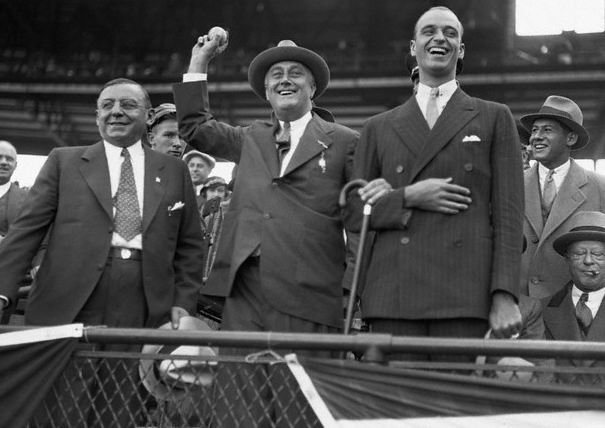
When the Cubs and Yankees played each other in Game 3 of the 1932 World Series, two VIPs were sitting in the front row; Mayor Anton Cermak of Chicago and Governor Franklin D. Roosevelt of New York. Roosevelt was the Democratic nominee for the Presidency and was campaigning in the Midwest. The paraplegic Roosevelt leaned against his son as he threw out the first pitch. He was the guest of Cermak, who was poised to deliver Chicago's vote to the Presidential challenger. Cermak was the creator and founder of Chicago's Democratic Machine, and was extremely powerful despite only having been the Mayor since 1931. History hasn't noted what these two men discussed that day, but it has mythologized the game itself. It was the game that Babe Ruth supposedly called his shot.
Unfortunately for Mayor Cermak, he never went to another Cubs game after that World Series loss to the Yankees.
On February 15, 1933 after a fishing trip in the Bahamas, Franklin Roosevelt emerged from his yacht in Miami, and a small crowd was there to greet him. Chicago Mayor Anton J. Cermak was in the crowd, and so was a man named Giuseppe Zangara.
After a short speech, Roosevelt motioned Cermak to his side in the back seat of a convertible. They were talking to each other when Zangara raised a handgun and began shooting. He claimed to be aiming for Roosevelt, but he hit Cermak and four others. The crowd collapsed on Zangara, and wrestled him to the ground, as Cermak was rushed to the hospital in Roosevelt's car. During that ride, with Roosevelt at his side, Cermak supposedly said: "I am glad it was me instead of you."
The real question is: was the assassin trying to hit Roosevelt or Cermak? Everyone assumed the intended victim was Roosevelt, but the triggerman Giuseppe Zangara was Sicilian, and it’s very possible he was sent by the Chicago Outfit to retaliate for Cermak's move against Frank Nitti in the Chicago bootlegging business. We'll never know for sure. Zangara was executed only a few weeks after Cermak died.
After Cermak's death on March 6, 1933, 22nd Street was renamed "Cermak".
A few weeks later on Opening Day at Wrigley Field, the Chicago Cubs had a moment of silence in honor of their fallen mayor.
They finished in third place that season, six games behind the New York Giants.
When the Cubs and Yankees played each other in Game 3 of the 1932 World Series, two VIPs were sitting in the front row; Mayor Anton Cermak of Chicago and Governor Franklin D. Roosevelt of New York. Roosevelt was the Democratic nominee for the Presidency and was campaigning in the Midwest. The paraplegic Roosevelt leaned against his son as he threw out the first pitch. He was the guest of Cermak, who was poised to deliver Chicago's vote to the Presidential challenger. Cermak was the creator and founder of Chicago's Democratic Machine, and was extremely powerful despite only having been the Mayor since 1931. History hasn't noted what these two men discussed that day, but it has mythologized the game itself. It was the game that Babe Ruth supposedly called his shot.
Unfortunately for Mayor Cermak, he never went to another Cubs game after that World Series loss to the Yankees.
On February 15, 1933 after a fishing trip in the Bahamas, Franklin Roosevelt emerged from his yacht in Miami, and a small crowd was there to greet him. Chicago Mayor Anton J. Cermak was in the crowd, and so was a man named Giuseppe Zangara.
After a short speech, Roosevelt motioned Cermak to his side in the back seat of a convertible. They were talking to each other when Zangara raised a handgun and began shooting. He claimed to be aiming for Roosevelt, but he hit Cermak and four others. The crowd collapsed on Zangara, and wrestled him to the ground, as Cermak was rushed to the hospital in Roosevelt's car. During that ride, with Roosevelt at his side, Cermak supposedly said: "I am glad it was me instead of you."
The real question is: was the assassin trying to hit Roosevelt or Cermak? Everyone assumed the intended victim was Roosevelt, but the triggerman Giuseppe Zangara was Sicilian, and it’s very possible he was sent by the Chicago Outfit to retaliate for Cermak's move against Frank Nitti in the Chicago bootlegging business. We'll never know for sure. Zangara was executed only a few weeks after Cermak died.
After Cermak's death on March 6, 1933, 22nd Street was renamed "Cermak".
A few weeks later on Opening Day at Wrigley Field, the Chicago Cubs had a moment of silence in honor of their fallen mayor.
They finished in third place that season, six games behind the New York Giants.
Tuesday, May 08, 2012
"Cheeseland" available for pre-order today!
Eckhartz Press Releases Cheeseland, by Randy Richardson
Eckhartz Press is thrilled to announce their next title, "Cheeseland", written by attorney and award-winning journalist, Randy Richardson. His essays have been published in the anthologies Chicken Soup for the Father and Son Soul, Humor for a Boomer's Heart, The Big Book of Christmas Joy, and Cubbie Blues: 100 Years of Waiting Till Next Year, as well as in numerous print and online journals and magazines. The online publication Gapers Block named his debut novel, Lost in the Ivy, one of the notable Chicago books of 2005.
Pre-Order NOW!!!
How do you mend a broken friendship? For Lance Parker and Daniel McAllister, the answer is simple: road trip. A trip to Wisconsin should be just the ticket to come to terms with the trauma that had drawn them apart. The journey of recovery is filled with comical twists as the two teens navigate Cheeseland, a place that blurs the line between adolescence and adulthood. The journey of recovery turns into a journey of discovery, as secrets are revealed. Cheeseland is a novel about loyalty, friendship and the self-destructive nature of secret-keeping and unresolved anger.
ORDER HERE
"...a dramatic touch that rivals Nicholas Sparks" - Robert W. Walker, author of Titanic 2012, Bismarck 2013, and Children of Salem
"A fun read and a great ride." - Mitch Michaels, Chicago rock radio legend
"Easy Rider meets a warped version of It's a Wonderful Life." - Christine Sneed, author of Portraits of a Few of the People I've Made Cry and the forthcoming Little Known Facts
The author is donating $1 from every soft cover sale of this book to the Elyssa's Mission , a Northbrook, Illinois-based not-for-profit foundation that provides help, support and suicide prevention programs to prevent teen suicide. Donations will help to fund the Mission's Signs of Suicide Program, which they currently provide to junior and high schools in Illinois.
Eckhartz Press is thrilled to announce their next title, "Cheeseland", written by attorney and award-winning journalist, Randy Richardson. His essays have been published in the anthologies Chicken Soup for the Father and Son Soul, Humor for a Boomer's Heart, The Big Book of Christmas Joy, and Cubbie Blues: 100 Years of Waiting Till Next Year, as well as in numerous print and online journals and magazines. The online publication Gapers Block named his debut novel, Lost in the Ivy, one of the notable Chicago books of 2005.
Pre-Order NOW!!!
How do you mend a broken friendship? For Lance Parker and Daniel McAllister, the answer is simple: road trip. A trip to Wisconsin should be just the ticket to come to terms with the trauma that had drawn them apart. The journey of recovery is filled with comical twists as the two teens navigate Cheeseland, a place that blurs the line between adolescence and adulthood. The journey of recovery turns into a journey of discovery, as secrets are revealed. Cheeseland is a novel about loyalty, friendship and the self-destructive nature of secret-keeping and unresolved anger.
ORDER HERE
"...a dramatic touch that rivals Nicholas Sparks" - Robert W. Walker, author of Titanic 2012, Bismarck 2013, and Children of Salem
"A fun read and a great ride." - Mitch Michaels, Chicago rock radio legend
"Easy Rider meets a warped version of It's a Wonderful Life." - Christine Sneed, author of Portraits of a Few of the People I've Made Cry and the forthcoming Little Known Facts
The author is donating $1 from every soft cover sale of this book to the Elyssa's Mission , a Northbrook, Illinois-based not-for-profit foundation that provides help, support and suicide prevention programs to prevent teen suicide. Donations will help to fund the Mission's Signs of Suicide Program, which they currently provide to junior and high schools in Illinois.
Cubs 365, May 8
On this day in 1963, Cubs pitcher Bob Buhl ended his long nightmare.
Pitchers are not supposed to be great hitters, but Bob Buhl took that concept to a whole different level.
His record setting streak began in 1961, when he was still with the Milwaukee Braves. That year he got a whopping 4 hits in 60 at bats, and struck out 30 times. But he really took it up a notch when he joined the Cubs in 1962. That year he went the entire season without getting a single hit. He was 0-70 and struck out 36 times. He didn't get another hit until May 8, 1963, when he slapped a single off Pirates pitcher Al McBean, who probably was razzed about it by his teammates the rest of his career.
Buhl's record still stands today; 88 consecutive at bats without getting a hit.
Luckily for Buhl, he was a pretty good pitcher. He pitched in the big leagues for 15 seasons and won 15 or more games five times, including once with the incredibly lousy 1964 Cubs. Buhl even managed to do something completely foreign to his Cubs teammates.
He won a World Series ring (with the 1957 Milwaukee Braves).
Pitchers are not supposed to be great hitters, but Bob Buhl took that concept to a whole different level.
His record setting streak began in 1961, when he was still with the Milwaukee Braves. That year he got a whopping 4 hits in 60 at bats, and struck out 30 times. But he really took it up a notch when he joined the Cubs in 1962. That year he went the entire season without getting a single hit. He was 0-70 and struck out 36 times. He didn't get another hit until May 8, 1963, when he slapped a single off Pirates pitcher Al McBean, who probably was razzed about it by his teammates the rest of his career.
Buhl's record still stands today; 88 consecutive at bats without getting a hit.
Luckily for Buhl, he was a pretty good pitcher. He pitched in the big leagues for 15 seasons and won 15 or more games five times, including once with the incredibly lousy 1964 Cubs. Buhl even managed to do something completely foreign to his Cubs teammates.
He won a World Series ring (with the 1957 Milwaukee Braves).
An interview with Randy Richardson
The latest Eckhartz Press writer is Randy Richardson. His novel "Cheeseland" will be our third release. If you want to know more about him, this is a great new interview by the Pen & Prosper blog.
What's that? Oh, you'd like to pre-order his book (which is officially coming out on May 29th)?
This is the place to do that.
What's that? Oh, you'd like to pre-order his book (which is officially coming out on May 29th)?
This is the place to do that.
Monday, May 07, 2012
Down at the Golden Coin e-book
The long awaited e-book of "Down at the Golden Coin" is now available at amazon.
It's also available at Kobo
It's still being worked through the system at Apple, Barnes & Noble, Sony, and a few other locations. As it becomes available in each different format, we'll let you know.
Download the e-book today! It's only $3.99
5 New Uses for Cassette Tapes
None of them involve actually listening to them.
An article for the craft-lovers among us.*
*And no, I'm not one of you people.
An article for the craft-lovers among us.*
*And no, I'm not one of you people.
RIP Goober
Sad news. George Lindsay, aka Goober from the Andy Griffith show passed away over the weekend. I was bummed when I saw the news.
Labels:
video vault
Father Knows Nothing
I posted a new Father Knows Nothing column over the weekend. This one was called "Caretaker Report Card." I graded my family based on how well they treated me last week when I was very sick.
You can read it here.
Cubs 365, May 7
On this day in 1918, Al Epperly was born. Just twenty years later he was the youngest player in the Majors, pitching for the 1938 Cubs. He was like a babe in a tub. So naturally, his teammates called him Tub.
Epperly pitched only 27 innings for the team, starting 4 games and relieving in 5 others, and he had some control issues (15 walks), but the Cubs still had high hopes for his future. But he never made it back to Chicago. He was pounded hard in the minors the next season, and the Cubs sold him to San Francisco of the PCL. He languished in the minors several more years, before being drafted into the service during the war.
In what can only be described as a Hollywood ending, Tub made it back to the big leagues five years after the war ended. Brooklyn called him up in 1950, at the age of 32. Epperly got to pitch in the big leagues one last time, making five appearances for the Dodgers.
Al Epperly is one of those epic minor league stories. He pitched 17 seasons overall—but only got into 14 big league games.
Epperly pitched only 27 innings for the team, starting 4 games and relieving in 5 others, and he had some control issues (15 walks), but the Cubs still had high hopes for his future. But he never made it back to Chicago. He was pounded hard in the minors the next season, and the Cubs sold him to San Francisco of the PCL. He languished in the minors several more years, before being drafted into the service during the war.
In what can only be described as a Hollywood ending, Tub made it back to the big leagues five years after the war ended. Brooklyn called him up in 1950, at the age of 32. Epperly got to pitch in the big leagues one last time, making five appearances for the Dodgers.
Al Epperly is one of those epic minor league stories. He pitched 17 seasons overall—but only got into 14 big league games.
Subscribe to:
Posts (Atom)